





Financial Analyst/Content Writer, RADEX MARKETS
Lawrence J. came from a strong technical and engineering background before pivoting into a more financial role later on in his career. Always interested in international finance, Lawrence is experienced in both traditional markets as well as the emerging crypto markets. He now serves as the financial writer for RADEX MARKETS.
đọc thêm

CHIA SẺ


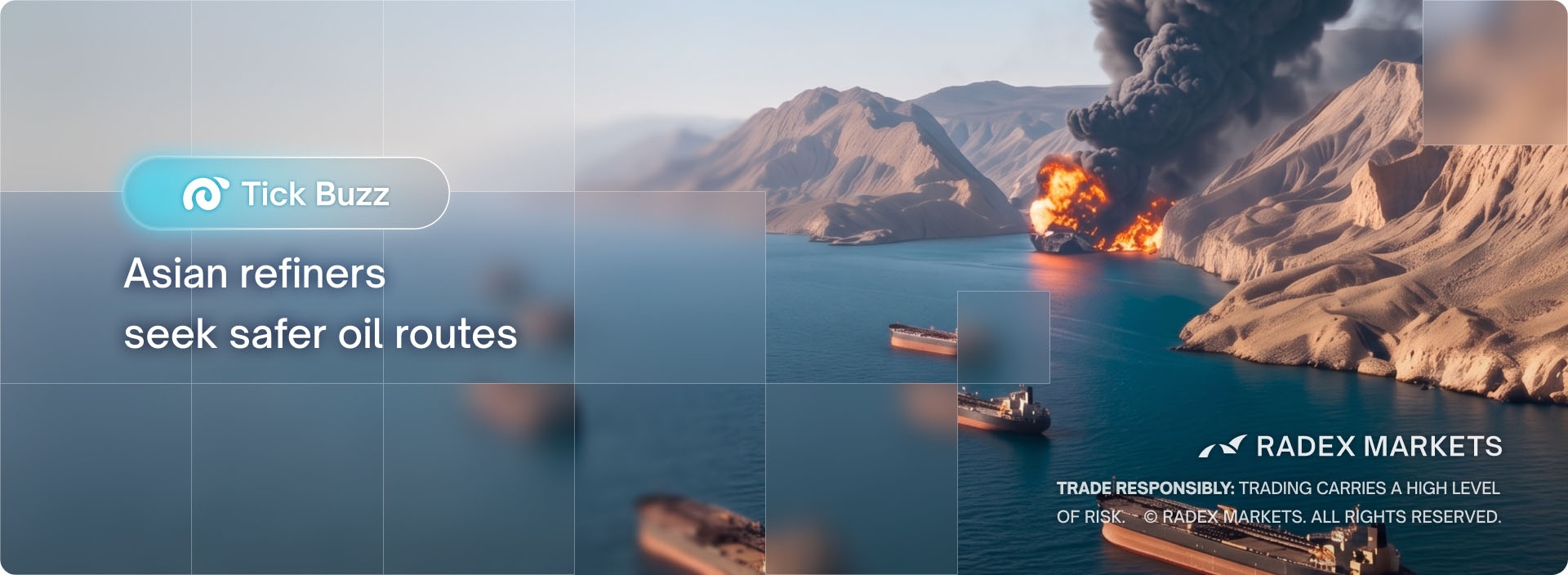
The ongoing turmoil in the Strait of Hormuz has forced shipping companies into exploring alternative trade routes in an effort to bypass the dangerous passage in and out of the Persian Gulf. Millions of barrels of oil are stuck in various Middle Eastern countries because the usual export pathways are closed off.
Saudi Arabia has a trump card for this exact scenario in the form of its East-West pipeline, which allows for crude oil to be transported hundreds of kilometres over the desert to the other side of the country, to the Red Sea port of Yanbu. This allows shipping companies to bypass the Strait of Hormuz entirely, avoiding the dangerous waters close to the Iranian mainland and picking up the same cargo in relative safety.
Saudi Aramco, the national oil company of Saudi Arabia, has encouraged ship owners to do just that, but there is a problem. Unfortunately, the Red Sea presents its own difficulties, namely the presence of Houthi rebels operating out of Yemen. Terrorism in the region has been a problem for a while already, and shipping companies are beginning to shun the secondary route just as they have abandoned the first.
On the 20th of July, the Houthis announced a naval blockade of the Saudi Arabian coastline and threatened vessels attempting to load Saudi oil. In an effort to avoid detection, some shipping vessels are opting to turn off their transponders to avoid potential attacks, but such operations are risky and are by no means a long-term solution. The increased pressure has tempered international willingness to navigate the Red Sea, with many companies opting to walk away completely.
Asian refiners traditionally buy Saudi crude oil according to free on board (FOB) terms, meaning the price they pay is the price to pick up the oil at the loading point; all transport and insurance costs are absorbed by the buyer. Saudi Aramco has been offering a discount to Asian buyers to partially compensate for the danger of navigating through dangerous waters, but it seems what little has been conceded is no longer enough.
A number of Asian refiners are now refusing to pick up the precious cargo in Yanbu because they cannot find shipping companies willing to take on the job. Insurance premiums have also shot up over the past few months, further driving up freight rates in the region. According to recent reports, at least two refiners have requested to start loading crude oil at the northern Egyptian port of Sidi Kerir, located in the Mediterranean Sea. This would allow vessels to avoid both the Persian Gulf and the Red Sea, paving the way for a relatively safe route around Africa. Unfortunately, such a detour would add weeks to the normal journey time, greatly increasing transport costs for the refiner.
Customers in Asia are understandably unhappy about the current situation, and although routing all Saudi oil through the Egyptian terminal is not a flexible enough solution to fully replace Yanbu, the different parties involved are running out of options.
The tenuous peace deal between the US and Iran is looking more fragile than ever this week and tensions in the region are flaring up once again. Crude oil prices are likewise on the rise, with Brent Crude punching back above $90 per barrel on Monday.
About the Author
Lawrence J. came from a strong technical and engineering background before pivoting into a more financial role later on in his career. Always interested in international finance, Lawrence is experienced in both traditional markets as well as the emerging crypto markets. He now serves as the financial writer for RADEX MARKETS.
Reviewed by RADEX MARKETS
Risk Warning: Trading derivatives and leveraged products carries a high level of risk, including the risk of losing substantially more than your initial investment.


Trading derivatives and leveraged products is high risk and may result in losses exceeding your initial investment. Read our T&C and PDS before trading.
MỞ TÀI KHOẢN