



Financial Analyst/Content Writer, RADEX MARKETS
Lawrence J. came from a strong technical and engineering background before pivoting into a more financial role later on in his career. Always interested in international finance, Lawrence is experienced in both traditional markets as well as the emerging crypto markets. He now serves as the financial writer for RADEX MARKETS.


AKTIEN


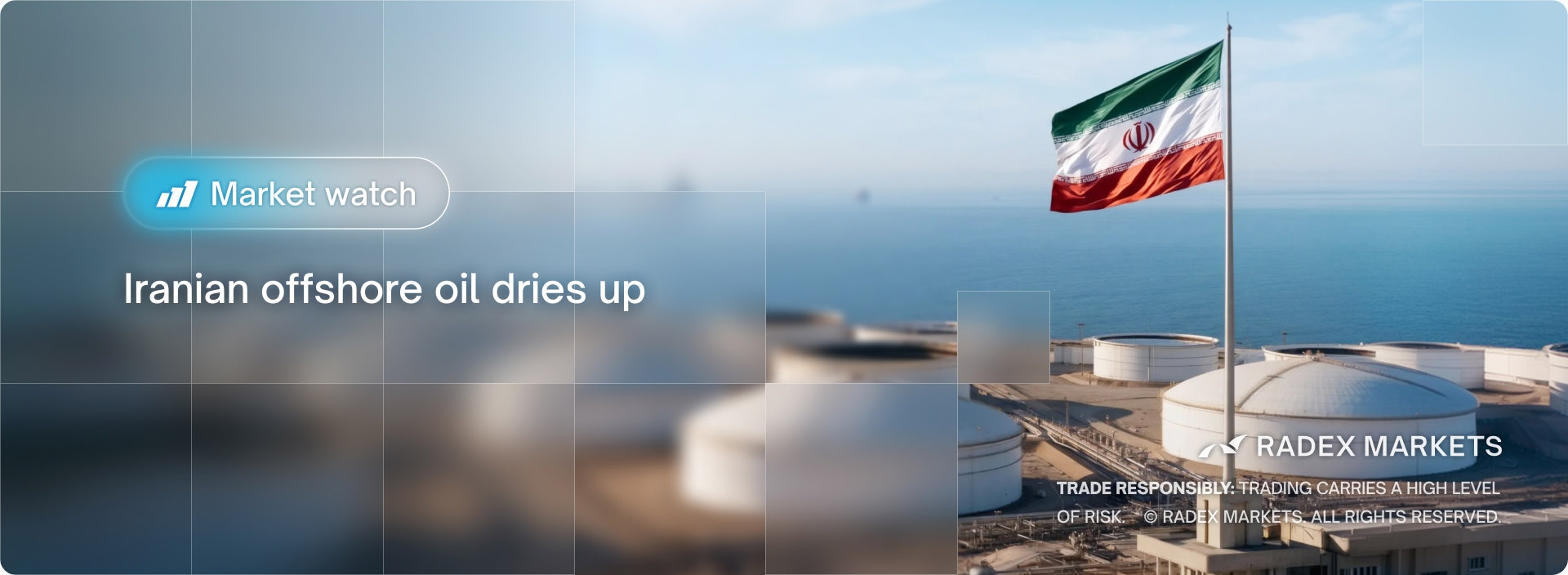
Multiple reports are claiming that Iran’s offshore crude oil supplies have now run dry as a result of the blockade enforced by the US Navy. Iran has long maintained a fleet of tankers stationed in international waters near Malaysia and Singapore, which it has used to supply its allies with crude oil throughout the duration of the conflict, bypassing international sanctions and granting the war-torn country a much-needed income stream. The reports indicate that back in April, 150 million barrels were held in floating storage, but because of the inability of Iranian ports to dispatch new oil tankers, these supplies have substantially dwindled. Without fresh inventory to replenish them, Iran’s offshore supplies have now apparently been exhausted. According to US Central Command, the naval blockade has denied the Iranian regime at least $25 billion in oil revenue, severely limiting Tehran’s ability to replace destroyed weaponry and infrastructure.
The missing oil volumes are not enough to cause a major supply shock; the bigger problem is that Iran now has very few economic options left, cornering the country into potentially more drastic courses of action. International shipping rates are already sky-high, as are risk premiums for navigating through middle eastern waters, and today’s development is certainly doing nothing to help matters. The Brent Crude benchmark rose to $114 per barrel earlier this morning, pulling further ahead of WTI contracts, which remain grounded at a more modest $100. The huge difference is indicative of just how high freight costs have risen; refiners would normally arbitrage this kind of spread, but the logistical costs of doing so now make such financial plays impossible.
Financial markets at large are reacting poorly to the deepening energy crisis. Higher crude oil prices mean higher inflation, something the world is collectively sick to death of hearing about. All asset classes were shaken yesterday, and the damage appears to be worsening this morning. Gold plummeted almost 3% on Thursday and continued the descent as today’s session got underway, briefly dipping under $4,000 per ounce. Silver has fallen to an 11-month low of $54 per ounce, platinum is lingering dangerously close to long-term support levels at $1,550, while palladium has already taken the plunge, dropping to a 16-month low of $1,040. Cryptocurrencies fared little better; Bitcoin fell back down to $81,000 but is showing some degree of resilience as of this morning.
Equities are facing the additional problem of an ongoing flight from technology stocks, causing the S&P 500 to drop 1.2% and the Nasdaq-100 to crumble 2.9%, although the Dow Jones managed to remain flat on the day. The tech selloff has been particularly unkind to Asian stock markets. The Nikkei 225 fell 2.7% yesterday and continued to collapse this morning before buyers stepped in. The Kospi followed a similar path, falling 3.5% on Thursday and remaining under pressure early on Friday. It was the same story in the Hang Seng index, which lost 3% yesterday amid concerns that the Chinese government has largely abandoned the idea of a planned stimulus package that investors had been hoping for. A turbulent end to the week to say the least.
About the Author
Lawrence J. came from a strong technical and engineering background before pivoting into a more financial role later on in his career. Always interested in international finance, Lawrence is experienced in both traditional markets as well as the emerging crypto markets. He now serves as the financial writer for RADEX MARKETS.
Reviewed by RADEX MARKETS
Risk Warning: Trading derivatives and leveraged products carries a high level of risk, including the risk of losing substantially more than your initial investment.


Der Handel mit Derivaten und gehebelten Produkten ist mit hohen Risiken verbunden und kann zu Verlusten führen, die Ihre ursprüngliche Investition übersteigen. Lesen Sie vor dem Handel unsere Allgemeinen Geschäftsbedingungen (T&C) sowie das Product Disclosure Statement (PDS).
KONTO ERÖFFNEN