





Financial Analyst/Content Writer, RADEX MARKETS
Lawrence J. came from a strong technical and engineering background before pivoting into a more financial role later on in his career. Always interested in international finance, Lawrence is experienced in both traditional markets as well as the emerging crypto markets. He now serves as the financial writer for RADEX MARKETS.


COMPARTIR


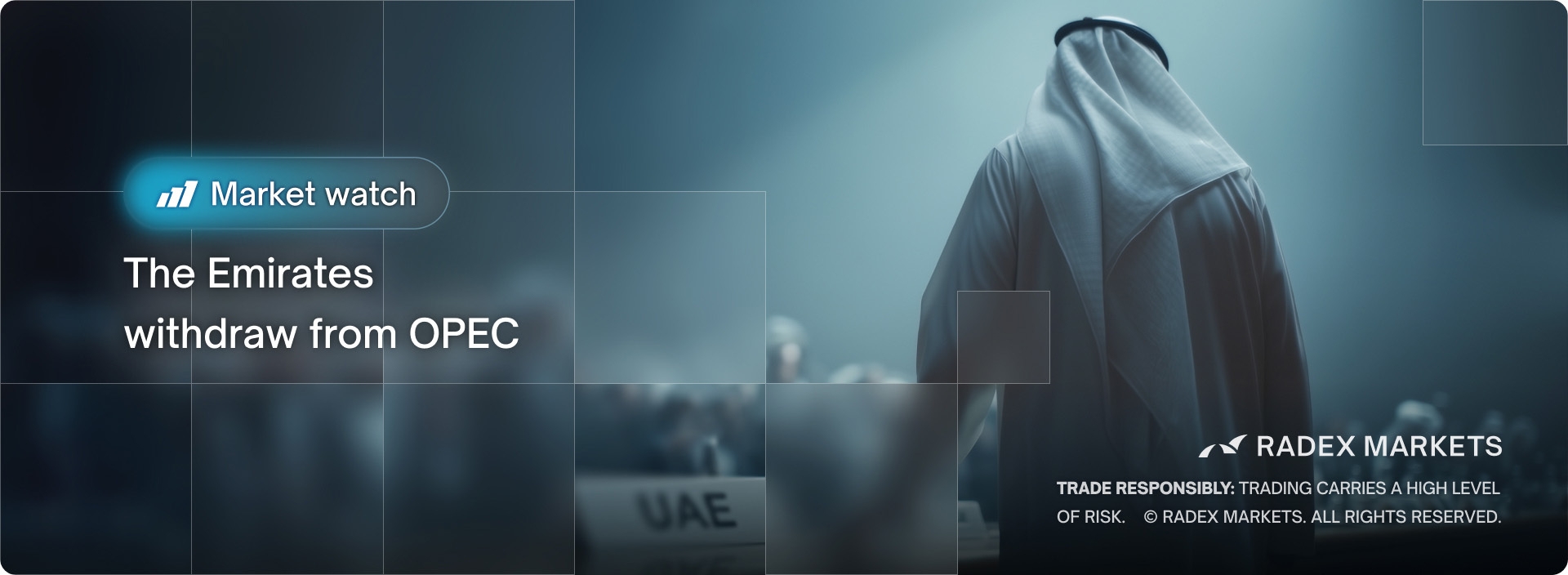
No one saw this one coming. Yesterday morning, state media announced that the United Arab Emirates will withdraw from the Organisation of the Petroleum Exporting Countries as early as Friday. By the same token, the nation will likewise abandon its seat at OPEC+. Abu Dhabi, one of the emirates in question, has been a member of OPEC since 1967, meaning its membership within the oil cartel predates the unification of the UAE as we know it. The Emirates have long been a major producer of oil, locally and globally, and now account for around 3 million barrels per day. The entire reason for the existence of OPEC is to allow the organisation to limit the production quotas of its member states in order to control the floor on crude oil prices. The cartel has seen its influence wane somewhat in recent years due to the massive surge in production in the United States, but the latest move marks a much more abrupt decline in OPEC’s power and reach. The UAE is recognised as having significant spare capacity and will now most likely increase its production of oil moving forward, possibly doubling its current output with the next two years. The timing of the move is no accident, with the conflict in Iran being the obvious major catalyst. The UAE has criticised other local powers for offering very little resistance to Iran’s drone and missile strikes over the last two months and the country’s relationship with Saudi Arabia has soured in recent times. The Emirates have expressed an openness to lower oil prices, which coincides with America’s, and particularly President Trump’s stance on such matters. Brent Crude contracts are currently trading for $111 per barrel while WTI is hovering around the $99 mark.
Confidence surrounding OpenAI continued to waver yesterday after the company missed sales and user targets, according to a report from the Wall Street Journal. The startup is also facing an ongoing lawsuit by Elon Musk, who has accused OpenAI of abandoning its original nonprofit mission and seeks the removal of CEO Sam Altman from the company’s board. Shares in Oracle (ORCL), a partner of OpenAI, fell 4% yesterday as markets digested the report. The development is perhaps not the best timed, arriving just ahead of quarterly earnings from major tech companies later today, including Alphabet (GOOG), Microsoft (MSFT), Amazon (AMZN) and META. The Nasdaq Composite index shed 0.9% on Tuesday, while the S&P 500 fared slightly better with a 0.5% loss and the Dow Jones closed close to flat on the day. Questions are once again being asked about a potential bubble in the artificial intelligence sector, but for now the money remains on the table.


Operar con derivados y productos apalancados implica un alto riesgo y puede resultar en pérdidas superiores a su inversión inicial. Lea nuestros Términos y Condiciones (T&C) y la Declaración de Divulgación del Producto (PDS) antes de operar.
ABRIR CUENTA