





Financial Analyst/Content Writer, RADEX MARKETS
Lawrence J. came from a strong technical and engineering background before pivoting into a more financial role later on in his career. Always interested in international finance, Lawrence is experienced in both traditional markets as well as the emerging crypto markets. He now serves as the financial writer for RADEX MARKETS.


AKCJA


The Brent Crude benchmark remains stubbornly above $110 per barrel and freight costs are surging worldwide. The chokepoint that is the Strait of Hormuz continues to throttle seaborne traffic, causing logistical challenges that have impeded the flow of crude oil for most of this year. The bottleneck is wreaking havoc among the global shipping industry and maritime journeys are longer and more expensive than ever.
On top of the high price of bunker fuel, the maritime transport industry is also facing mounting ecological accusations. Commercial shipping accounts for 3% of global carbon emissions, but more importantly, tankers and container vessels are responsible for emitting huge amounts of sulphur and nitrogen oxides into the atmosphere, producing toxic smog that concentrates around ports and coastal areas, causing severe respiratory problems among local populations.
The combination of economic and environmental pressures is driving shipping companies and coastal authorities alike to seriously consider alternative options. Massive shipping vessels are just as problematic when docked because they often continue to rely on diesel generators to keep electricity flowing when in port for loading/unloading. The entire system is in dire need of profound structural change.
These changes may be closer than we think, at least according to a joint paper from the British Ports Association and Lloyd's Register, which claims that advanced nuclear technology could reshape not only port environments, but vessel propulsion itself. According to the report, ‘advanced nuclear technologies are shifting from the theoretical into practical consideration for ports and the maritime sector’. The paper serves as a briefing for harbour authorities and terminal operators as to what a transition to nuclear would look like.
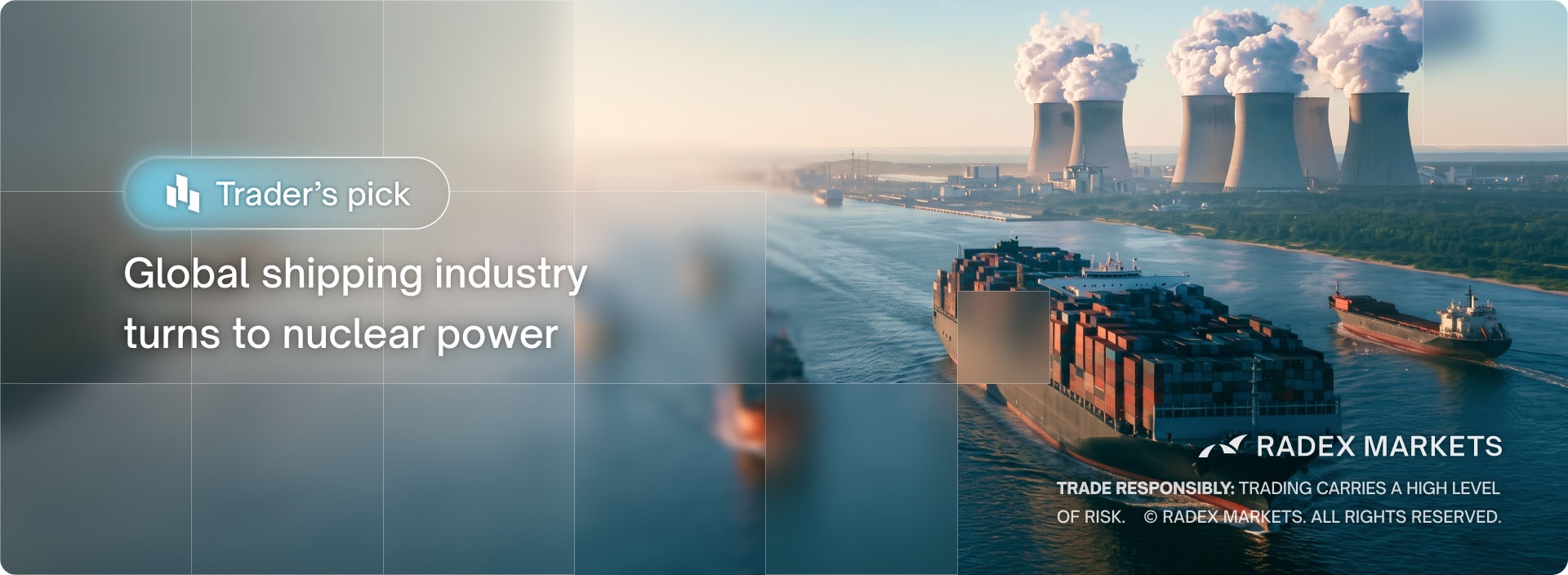
Nuclear-powered ships may sound like something straight out of science fiction but hundreds of such vessels are already in operation around the world, the problem is that they are almost exclusively military vehicles. There are roughly 140 nuclear submarines in active service, as well as a dozen nuclear-powered aircraft carriers, but Russia is the only country on Earth that maintains a civilian fleet of such vessels, in the form of its nuclear-powered icebreakers.
Major shipping conglomerates, in conjunction with governments and research groups, are now carrying out feasibility studies for nuclear-powered transport ships, while regulatory bodies are hurrying to establish the legal frameworks that would dictate how ports and naval authorities would handle such vessels.
The obvious problem with building, for example, a nuclear-powered container ship, is that it would cost considerably more than a conventional equivalent. A large trans-Pacific container vessel typically runs up to $120 million, while the most optimistic price tag for the nuclear version would likely surpass $220 million. Given the appalling track record in the nuclear industry at large, this figure could easily double or triple, especially during the prototype phase.
So why bother? Because according to Lloyd’s, a nuclear container ship could eliminate up to $68 million in annual operating expenses, which includes both fuel and carbon penalties. A nuclear ship would also have around 5% more cargo space because it is not carrying thousands of tonnes of heavy bunker fuel. In the same vein, the new ships would benefit from better hydrodynamics and weight distribution, sitting perfectly in the water throughout their entire life cycle.
A nuclear-powered container ship would also travel faster than its conventional counterpart, because it would incur almost no economic loss in running its turbines at full power. Increasing the speed of a vessel exponentially increases its fuel consumption, which is why commercial vessels travel intentionally slowly to save on fuel costs. With a nuclear ship, this concern goes out of the window. The fuel rods are loaded into the reactor during the construction phase and will not be swapped out until years or even decades later. There is no point in being conservative with fuel given such a configuration.
The difference in speed could amount to a huge 50% difference between the two models. Current carriers usually maintain 18-20 knots or even less in some cases, whereas nuclear ships could easily reach speeds of 30 knots. The speed gap is more important than it first seems. As the saying goes, time is money. At 30 knots, a journey from Asia to Europe could take as little as 10 days if going via the Suez Canal, which is fast enough to start stealing some time-sensitive cargo from air freight networks, which would completely shift logistics economics in favour of maritime freight.
Economics aside, the environmental benefits of nuclear-powered ships are obvious. Harmful exhaust gases are removed from equation entirely, reducing coastal pollution and smog. Heavy fuel oil leeks are no longer a consideration due to the absence of any fuel on board. Sulphur scrubbers are not required, meaning the ship stops flushing out toxic, acidic water laden with heavy metals into the world’s oceans.
Back on land, embracing nuclear reactors to power docking facilities makes even more sense. While installing a nuclear reactor on a ship presents a number of technical difficulties, installing a small modular reactor on land is comparatively trivial. These reactors could supply electricity to ships in port, reducing their reliance on diesel generators, while nuclear-powered ships could plug into the local grid and even offload some of their excess power while docked.
SMRs have been talked about for many years at this point, but there is now an urgent economic incentive to push adoption forward due to the ravenous energy demands of AI data centres. Instead of waiting for slow, bureaucratic processes and hesitant public entities, the likes of Google, Amazon and Microsoft are beginning to bite the bullet and fund such ventures themselves. Once the ball gets rolling and economics of scale begin to severely put a dent in production costs, SMRs could well start springing up everywhere, both on land and at sea.
About the Author
Lawrence J. came from a strong technical and engineering background before pivoting into a more financial role later on in his career. Always interested in international finance, Lawrence is experienced in both traditional markets as well as the emerging crypto markets. He now serves as the financial writer for RADEX MARKETS.
Reviewed by RADEX MARKETS
Risk Warning: Trading derivatives and leveraged products carries a high level of risk, including the risk of losing substantially more than your initial investment.


Handel instrumentami pochodnymi oraz produktami lewarowanymi wiąże się z wysokim ryzykiem i może prowadzić do strat przekraczających wartość początkowej inwestycji. Przed rozpoczęciem handlu należy zapoznać się z naszymi Warunkami i Zasadami (T&C) oraz Dokumentem ujawniającym informacje o produkcie (PDS).
OTWÓRZ KONTO