




Financial Analyst/Content Writer, RADEX MARKETS
Lawrence J. came from a strong technical and engineering background before pivoting into a more financial role later on in his career. Always interested in international finance, Lawrence is experienced in both traditional markets as well as the emerging crypto markets. He now serves as the financial writer for RADEX MARKETS.


SHARE


Investors collectively slammed the brakes on the AI trade last week, following abysmal third quarter earnings reports from Alphabet (GOOG), Amazon (AMZN) and Intel (INTC). Google disappointed on search engine and ad monetisation, while Amazon’s e-commerce section showed its worst growth rate in recent times. In other words, the very businesses the companies are known for are showing severe signs of weakness. The two hyperscalers revealed impressive growth in their respective cloud operations, but Wall Street crowds are growing weary of the colossal amounts of cash being funnelled into new data centres. The truly shocking result arrived on Thursday evening, when Intel (INTC) published an exceptionally weak Q4 revenue forecast, prompting a huge selloff in extended trading hours, which culminated in a jaw-dropping 28.6% collapse in share price on Friday. All bets were off at that point, as investors rushed to get out of anything even tangentially related to big tech. The Philadelphia Semiconductor Index (SOX) fell 7.2% on the final trading day of the week, with all the big names being relentlessly punished. By the end of the day, the chip manufacturing sector was in flames, with Nvidia (NVDA) down 4.2%, AMD suffering a 10.9% drop, Micron (MU) falling 5.3% and Seagate (STX) and Western Digital (WDC) both crumbling over 7%. The combined selling pressure crushed the Nasdaq-100 to its lowest level since early August, incurring a 3.5% loss on Friday.
Despite the hilarious lamentations of ‘big tech being carried out on a stretcher’, the wider US stock market held up remarkably well. The Dow Jones fell a modest 1.1% on Friday, while the S&P 500 shed a more sizeable 1.8%, suggesting that market participants were not willing to abandon ship completely. Energy, consumer staples, utilities and healthcare all performed admirably, seemingly immune to the carnage unfolding in technology stocks.
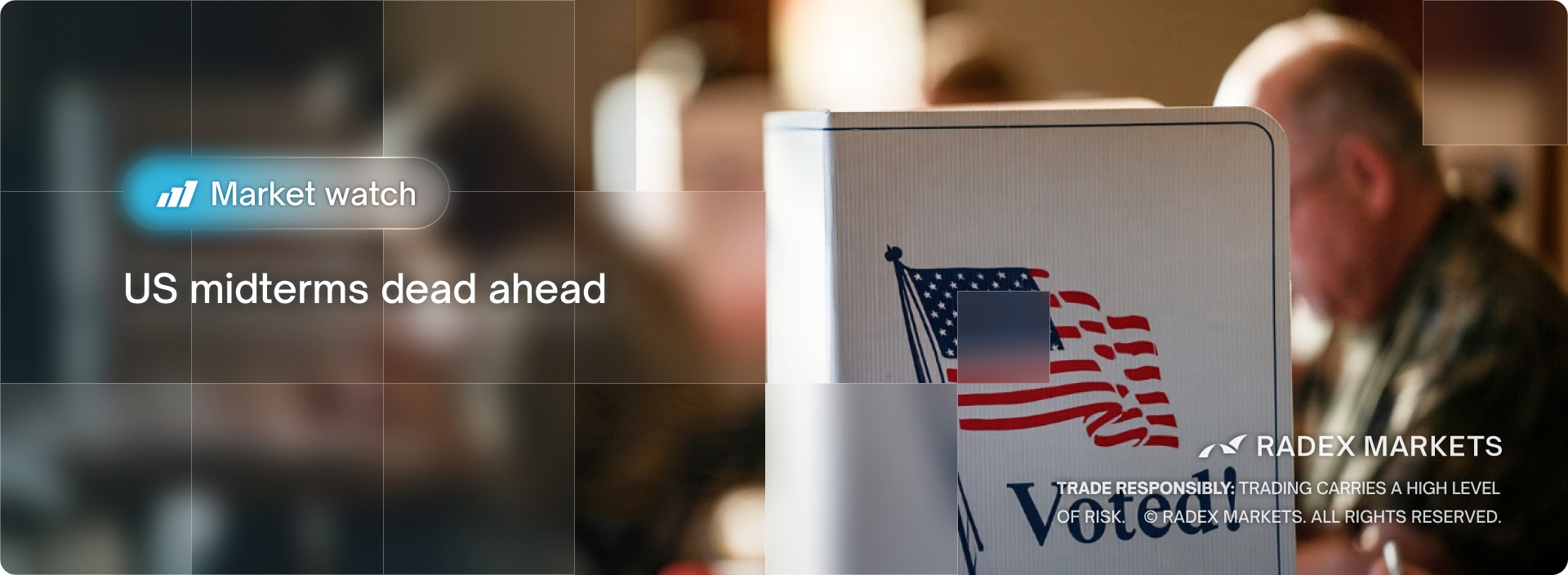
The technology bloodbath is directly intertwined with this week’s midterm elections in the United States. A strong performance from the Democrat contingent could profoundly dent investor confidence in the semiconductor trade due to foreseen restrictions on data centre construction, harsher environmental regulations and an AI sector faced with more rigorous scrutiny in general. With that in mind, the global tech sector remains in limbo going into this week.
Investors in precious metals were in no position to mock those in semiconductors, after gold crashed through the $4,000 support level on Friday to reach lows of $3,875 per ounce. Silver collapsed in similar fashion, losing the equally psychologically important $50 threshold and falling almost 6% on the day. The brutal selloff in equities forced investors to liquidate their bullion holdings in a desperate attempt to shore up their defences, crushing precious metal prices in the process. Gold and silver are now lower than they were 12 months ago, reflecting a macro environment that has heavily punished non-yield-bearing assets for most of this year. Astonishingly, despite the largest hack in the history of cryptocurrencies, amounting to $6.36 billion by the latest count, Bitcoin is holding up rather well, reclaiming $78,000 per coin over the weekend and rising once again this morning.
Traders will need to brace themselves for the coming week. Two events to look out for today, the first being the ISM Manufacturing PMI later this afternoon, followed by the latest earnings from Apple (AAPL) after market close, marking the first earnings call with new CEO John Ternus at the helm of the company. On Tuesday, all hell will break loose with the US midterm elections, which will see all 435 House of Representative seats as well as 35 Senate seats up for grabs. It will take a long time for all the ballots to be counted, with results spilling over to the Wednesday session and potentially even beyond. It is somewhat traditional for the incumbent party to lose the midterms, so the result is largely priced in, but US elections have surprised markets before and participants would do well to expect the unexpected. Tuesday will also provide an update from the Reserve Bank of Australia, which is forecast to increase rates on the Australian dollar by another 25-bps, bringing the target rate up to 4.85% – a rate not seen since 2008. Tuesday evening also sets the stage for the latest quarterly earnings from AMD, a company that would certainly welcome a dose of good news. On Wednesday, the ISM will complete the PMI picture with the services component of the US economy, while the ADP will publish the October employment change. Eurozone inflation will also hit the newswires on Wednesday, a figure that is expected to rise to 3.9% for the October print. Thursday will see attentions turn to the Bank of England, the members of which will almost certainly enact a 25-bps rate hike of their own, lifting the base rate to 4%. As if all the above were not enough, non-farm payrolls are scheduled for release on Friday, closing the chapter on what is set to be a highly volatile week.
About the Author
Lawrence J. came from a strong technical and engineering background before pivoting into a more financial role later on in his career. Always interested in international finance, Lawrence is experienced in both traditional markets as well as the emerging crypto markets. He now serves as the financial writer for RADEX MARKETS.
Reviewed by RADEX MARKETS
Risk Warning: Trading derivatives and leveraged products carries a high level of risk, including the risk of losing substantially more than your initial investment.


การซื้อขายตราสารอนุพันธ์และผลิตภัณฑ์ที่มีเลเวอเรจมีความเสี่ยงสูง และอาจทำให้เกิดผลขาดทุนมากกว่าเงินลงทุนเริ่มต้นของคุณ โปรดอ่านข้อกำหนดและเงื่อนไข (T&C) และเอกสาร Product Disclosure Statement (PDS) ก่อนทำการซื้อขาย
เปิดบัญชี