Trading derivatives and leveraged products is high risk and may result in losses exceeding your initial investment. Read our T&C and PDS before trading.

nav-close
float feedback icon livechat

RM SOCIAL: COPY TRADING FEATURE LIVE NOW

YOUR GO-TO BROKER
FOR TRADING

Access 1000+ products including Forex, Share CFDs, Indices and Metals with MetaTrader 4/5 Platforms

LIVE SPREADS

EUR / USD

SPREAD

0.00

BID

-----

ASK

-----

XAU / USD

SPREAD

0.90

BID

-----

ASK

-----

EUR / JPY

SPREAD

0.10

BID

-----

ASK

-----

USD / JPY

SPREAD

0.00

BID

-----

ASK

-----

GBP / USD

SPREAD

0.20

BID

-----

ASK

-----

Live prices are indicative only.

ENHANCE YOUR TRADING JOURNEY WITH US

Trade like never before with our optimal features. Our seamless and user-friendly platform enables you to navigate the markets with ease.

an icon says 0.0 pips, a feature of radex markets

#01

Spreads From 0

an icon says 0.0 pips, a feature of radex markets

#02

350+ Products Available

up to 1:500 leverage

#03

Up to 1:500 Leverage

3 base currency icon

#04

3 Base Currencies

your account manager icon

#05

Your Own Account Manager

live support icon

#06

Live Support 24/7

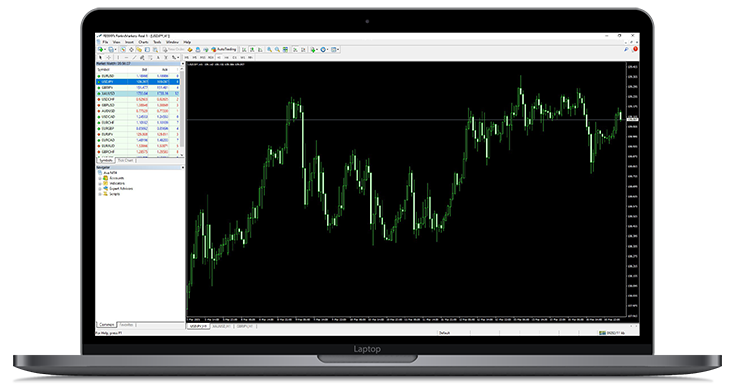
a PC for using MetaTrader, a forex platform

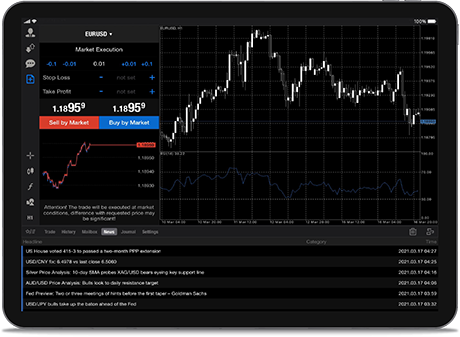
a Pad for using MetaTrader, a forex platform

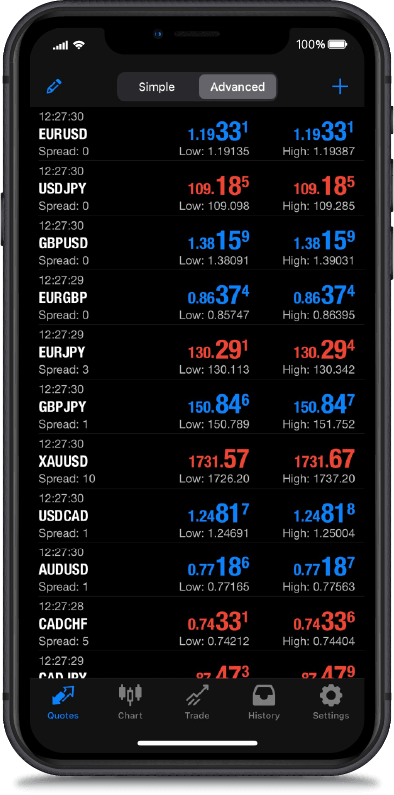
a cellphone for using MetaTrader, a forex platform

FIND YOUR GEAR
IN TRADING

At RADEX MARKETS
we offer a full range of platforms
that meet your needs.

MARKET WATCH

Huge week for central banks

September 2026

  ●  Fed, BoE, BoJ scheduled to adjudicate   ●  Crude oil remains above $100   ●  Clarity Act vote on Tuesday Huge week for central banks There were no surprises on the American inflation front last week. Both the producer and consumer price indices fell almost dead in line with expectations, with the core component of the CPI edging marginally higher than anticipated month-over-month. The combined reports all but cement a rate hike on Wednesday. In what is likely to be a huge week for central banks around the world, the Federal Reserve, Bank of England and Bank of Japan are all scheduled to deliver their verdicts within a 48-hour period. FedWatch is now leaning towards a 90% chance of a 25-bps rate hike, which would push interest rates on the dollar to the 3.75-4.00% range. The Bank of England is not expected to budge on Thursday, and rates on the pound are likely to remain at 3.75% until November at the earliest, despite inflation rising to 2.9% in July. Finally, the Bank of Japan is forecast to raise rates on the yen on Friday morning, pushing the official target rate on the Japanese currency to 1.25%. Markets are generally confident enough in the above predictions that any deviation will cause significant movement on the affected pairs. Beyond the decisions themselves, the attached commentary will also play a part in interest rate forecasts over the rest of the year and into the next. According to reports emerging out of the City of London on Friday, the BoE could hike interest rates no fewer than four times in 2027 and may start doing so as early as November. Rate decisions aside, the rest of the economic calendar is relatively barren this week, while the earnings schedule is devoid of life entirely. Troubled waters in the Red Sea The situation in the Middle East is as tumultuous as ever. While Iran and neighbouring countries continue to play a central role in the conflict, attentions are increasingly turning to Yemen and Saudi Arabia. The Houthi faction gained a significant foothold on the Red Sea last week, seizing strategically important coastal towns as well as Perim Island, which sits in the narrowest part of the Bab al-Mandab Strait. The additional rebel presence is bad news for international shipping companies seeking to transit the passage, putting further pressure on oil deliveries. To make matters worse, Saudi’s East-West pipeline was the victim of a drone strike last Thursday and has since been shut down. Crude oil prices underwent a moderate correction on Friday following the stretch to $110 the day prior, but Brent Crude is back on the front foot as of this morning, opening the week at $107 per barrel. Given the scale of the problem, market participants could be forgiven for wondering why oil prices are not higher still. The International Energy Agency may have an answer. According to the agency’s forecasts, the world is likely to see a drop in demand to the tune of 2.5 million barrels per day in 2026, exceeding previous estimates of 1.6 million BPD. A reduction in global demand, coupled with nations tapping into their accumulated strategic reserves, has so far kept something of a lid on oil prices, but said reserves can only endure for so long. Last chance for Clarity The endlessly delayed Clarity Act will face a procedural vote on Tuesday, in what is looking like a do-or-die moment for the beleaguered bill. Senate Republicans released a new version of the legislation just last week, meaning the bill is still being worked on ahead of this week’s vote. The Clarity Act will need to secure 60 votes tomorrow, failing which, the odds of the bill passing this year will realistically drop to zero. Republicans currently hold 53 seats, requiring a sizeable contingent from the other side of the aisle to cross over. Prediction markets are not optimistic, with Polymarket advertising a mere 26% chance of the bill being enshrined into US law this year. A surprise ‘yes’ vote on Tuesday could provide some serious momentum to cryptocurrency prices. #CLARITYACT #REDSEA #FED About the Author Lawrence J. came from a strong technical and engineering background before pivoting into a more financial role later on in his career. Always interested in international finance, Lawrence is experienced in both traditional markets as well as the emerging crypto markets. He now serves as the financial writer for RADEX MARKETS. Reviewed by RADEX MARKETS Risk Warning: Trading derivatives and leveraged products carries a high level of risk, including the risk of losing substantially more than your initial investment.


READ MORE
RM Rooms Icon

RM NEWS ROOM

Temporary trading hours update - August 2026

02 September, 2026

Please note that due to the upcoming holiday in August 2026, trading hours for the following product will be affected.Please note: Due to liquidity constraints, trading hours may be subject to further change. All times displayed are in Platform Time (GMT+3).  

READ MORE

ECONOMIC CALENDAR

( GMT +03:00 13:06 )
March 26, 2024
2026-09-15 02:00:00+00:00CNUnemployment Rate Aug
2026-09-15 02:00:00+00:00CNIndustrial Production YoY Aug
2026-09-15 06:00:00+00:00GBEmployment Change Jul

TRADER'S PICK

Amazon conducts first sterling bond sale

September 10, 2026

On Wednesday, Amazon launched its first ever sale of sterling-denominated bonds, raising over £4 billion in the process. The sale was conducted by a syndicate of four banks, comprising JPMorgan Chase, Barclays, HSBC and NatWest, and offered investors four different tranches of maturities ranging from 3 years to 19 years. Institutional appetite was fierce to say the least; although bond sales across the four tranches amounted to £4.25 billion, the offering was substantially oversubscribed, with the order book peaking at over £12 billion in total. Yesterday’s sterling-denominated issuance marks Amazon’s fourth non-USD debt offering of the year, following on from a record-breaking €14.5 billion Eurobond sale in March, a 2.8 billion Swiss Franc sale in May and a 10 billion Canadian dollar sale in June. Combined, the four bond sales raised the equivalent of $36 billion in foreign capital. In comparison, Amazon has raised an estimated $62 billion in USD-denominated debt so far this year, meaning over a third of the company’s total issuance in 2026 has been in foreign currencies. The sheer amounts of cash needed to build artificial intelligence infrastructure has forced Amazon into diversifying its investor base, expanding the ravenous search for cash beyond American borders. The company’s capital expenditures were reported to reach an estimated $220 billion this year and the vast majority of that is expected to be pumped straight into AI ventures. Amazon is not alone. Google is arguably the pioneer in foreign debt instruments, having conducted a sterling-denominated bond sale of its own back in February of this year. The sale raised £5.5 billion across 5 different tranches, including a stunning 100-year bond set to mature in 2126. Alphabet has in fact organised sales in a wide range of currencies, including the Euro, the Japanese yen, the Swiss Franc and the Canadian and Aussie dollars – the broadest footprint of any of the major tech companies. The scale of the capital being raised is now so immense that hyperscalers such as Amazon, Google and Microsoft are matching major institutions as the dominant issuers of high-quality debt instruments. This is causing some interesting side effects, both in the US and in Europe. The bonds being offered by massive American corporations are very attractive to European investors, who only have a limited amount of capital to allocate. Because of this, European corporate bonds are being crowded out of the market, forcing the companies that issue them to offer higher interest rates in order to compete with their American rivals. This, in turn, pushes up financing costs for local European corporations. It is a double blow. Firstly, European companies are forced into offering higher yields to attract investors; secondly, US companies are siphoning away the limited amount of European capital to fund their own ventures, which are sometimes in direct competition with their European counterparts. It is yet another financial wedge being hammered into the ever-widening tech gap. In the United States, the problem is completely different. Because the massive American hyperscalers are considered almost as safe as the US government itself, and because the yields on offer are more attractive, some asset managers are selling off US treasuries to free up capital to purchase corporate bonds from the likes of Google or Amazon. Investors can get an extra 0.8% yield on a 10-year corporate bond compared to a 10-year US treasury, with no additional perceived risk. More than forcing other companies to offer better interest rates in order to attract capital, the dynamic is forcing the Department of the Treasury itself to compete for cash. As an aside, this dynamic does not play out to the same extent in sovereign European debt markets because institutional investors face something called a ‘spread risk charge’, which legally requires them to lock up significant cash reserves when holding corporate bonds, to the tune of 8-9%. This requirement is responsible in no small part for preventing institutional firms from mass dumping European debt. Corporate bonds are more competition for the same pool of cash, and this extra competition is now so large that European companies and the US government are feeling the pressure. Alphabet, Amazon, Meta, Microsoft, Oracle and SpaceX accounted for $20 billion in corporate bond issuance in 2024; this year, the figure already stands at $180 billion. The insatiable appetite of artificial intelligence knows no bounds. About the Author Lawrence J. came from a strong technical and engineering background before pivoting into a more financial role later on in his career. Always interested in international finance, Lawrence is experienced in both traditional markets as well as the emerging crypto markets. He now serves as the financial writer for RADEX MARKETS. Reviewed by RADEX MARKETS Risk Warning: Trading derivatives and leveraged products carries a high level of risk, including the risk of losing substantially more than your initial investment.

READ MORE
LiveChat
livechat

Trading derivatives and leveraged products is high risk and may result in losses exceeding your initial investment. Read our T&C and PDS before trading.

OPEN ACCOUNT