Le trading de produits dérivés et à effet de levier comporte un risque élevé et peut entraîner des pertes supérieures à votre investissement initial. Veuillez lire nos Conditions générales (T&C) ainsi que le Product Disclosure Statement (PDS) avant de trader.

nav-close
float feedback icon livechat

RM SOCIAL : COPY TRADING DISPONIBLE DÈS MAINTENANT !

VOTRE BROKER DE RÉFÉRENCE
POUR LE TRADING

Accédez à plus de 1000 produits, comme le Forex, les actions CFD, les indices et les métaux, via les plateformes MetaTrader 4/5

SPREADS EN DIRECT

EUR / USD

SPREAD

0.00

ACHAT

-----

VENTE

-----

XAU / USD

SPREAD

0.90

ACHAT

-----

VENTE

-----

EUR / JPY

SPREAD

0.10

ACHAT

-----

VENTE

-----

USD / JPY

SPREAD

0.00

ACHAT

-----

VENTE

-----

GBP / USD

SPREAD

0.20

ACHAT

-----

VENTE

-----

Les prix en direct sont donnés à titre indicatif seulement.

AMÉLIOREZ VOTRE EXPÉRIENCE DE TRADING AVEC NOUS

Tradez comme jamais auparavant grâce à nos fonctionnalités optimales.Notre plateforme, fluide et conviviale, vous permet de naviguer sur les marchés en toute simplicité.

an icon says 0.0 pips, a feature of radex markets

#01

Spreads à partir de 0

an icon says 0.0 pips, a feature of radex markets

#02

350+ Produits disponibles

up to 1:500 leverage

#03

Un effet de levier jusqu'à 1:500

3 base currency icon

#04

3 devises de base disponible

your account manager icon

#05

Gestionnaire de compte personnel

live support icon

#06

Assistance en direct 24h/24 et 7j/7

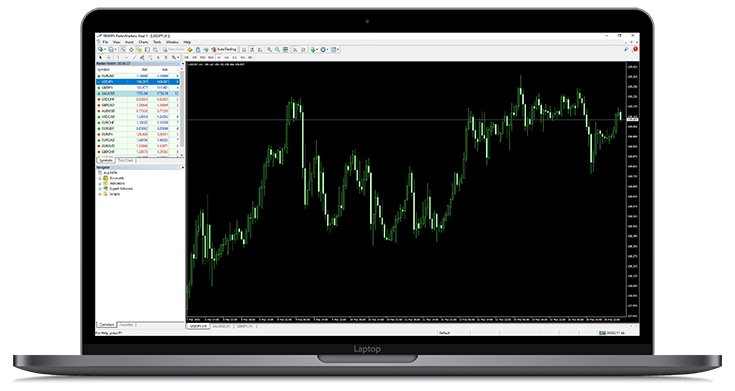
a PC for using MetaTrader, a forex platform

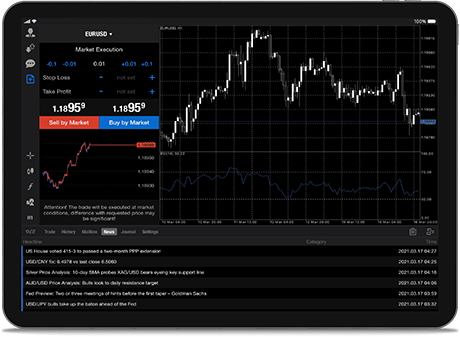
a Pad for using MetaTrader, a forex platform

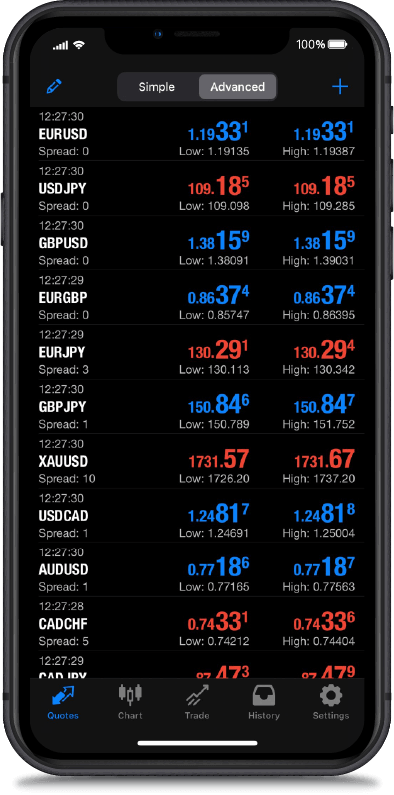
a cellphone for using MetaTrader, a forex platform

Il y a toujours un outil de trading fait pour vous

Chez RADEX MARKETS, nous proposons
une large gamme de plateformes Forex adaptées à vos besoins.

OBSERVATION DU MARCHÉ

Indiscriminate devastation

novembre 2026

Where do markets go from here? Last week’s price action was absolutely shocking, leaving even the most seasoned of veterans in awe of the destruction that indiscriminately ripped through every asset class in unison. The bloodbath in semiconductors went from bad to worse last Friday, culminating in a 10.7% loss for the PHLX index on the day and a 17% loss over the course of the week. Trillions of dollars of market valuation vanished into thin air as investors fled for the exit, with even the super heavyweights incurring staggering losses. Nvidia (NVDA) and Micron (MU) both lost nearly a quarter of their respective market caps last week, as did fellow semiconductor firm Credo Technology Group (CRDO); AMD and ARM Holdings (ARM) lost a fifth apiece; Sandisk (SNDK) fell by 28%; data centre energy company Bloom (BE) collapsed 26%; Marvell (MRVL) shed 22%; Seagate (STX), Western Digital (WDC) and Broadcom (AVGO) all lost between 12% and 14%. The sector-wide rug pull has left investors battered and bruised, scratching their heads for answers. Such answers are in fact pretty straightforward: people need cash, and they need it now. Friday’s action was a textbook liquidation event, one that left every single stock market participant desperately scrambling for pennies. When all was said and done, the Nasdaq-100 had lost 10.4% over the course of the week, while the S&P 500 and Dow Jones trailed behind with 8.6% and 8.0% losses respectively. It was the same story in precious metals, which have never once provided a safe haven to investors so far this year. Gold closed last Friday’s session 9% lower than the week prior, but the truly stunning bit of trivia is that the yellow metal has fallen by $2,000 per ounce since hitting its record high of $5,600 back in January, representing a 36% loss over the last 10 months. As bad as that sounds, the price action in silver has been far worse. After touting highs of $120 per ounce earlier in the year, the white metal has been thoroughly humbled, crumbling down to $40 last Friday, a 67% decline. The difference does a good job of illustrating the relative weakness of the silver trade compared to that of its more expensive counterpart. Central banks are not particularly interested in the metal, offering very little in terms of a sovereign backstop; the silver markets remain at the whims of industrial demand and speculation, printed on comparatively thin order books. The 55-60% losses in platinum and palladium show the same phenomenon. And then we have the outrageous drama unfolding in cryptocurrencies. The sector is obviously no stranger to brutal corrections and bear markets, but the price action on display since last October has been utterly harrowing. Crypto twitter was in disbelief on Saturday as Bitcoin broke down to $55k per coin, marking an unexpected new low on the charts and taking prices back to where they were back in 2021. Half a decade of sideways movement is understandably taking its toll on the collective psyche of the crypto sphere, particularly considering that altcoins have performed far worse over the same time frame, leaving many asking the question of what it was all for. Even Ethereum, the very backbone of the smart contract movement, is down 65% from five years ago. Crypto markets are blind to the supposed bottom signals that keep flashing, driving relentlessly lower anyway. For those who may be new to the sector, the current trajectory is genuinely unprecedented. Markets started turning to the dollar when it became apparent that the Federal Reserve would likely increase the target interest rate on the greenback. Attractive short-term Treasury bills likewise did much to siphon away crucial liquidity from riskier financial plays. The important thing to remember is that all such narratives can just as easily be abandoned once economic conditions become more forgiving. We may already be seeing early signs of such. According to the CME Fedwatch tool, interest rate traders had been considering a 25-bps rate hike with a 90%+ probability last week, with the remainder eying an even stronger move toward a 50-bps hike, with Fed governor Waller saying as much during various interviews. This morning, there was a subtle but definitive shift away from such predictions, with Fedwatch now floating a 7% lean towards a rate hold – an option completely absent from last week’s deliberations. A number of Fed members have also expressed concern that the hot semiconductor trade was driving up prices of consumer electronics, in turn translating to higher inflation figures. A flimsy excuse perhaps, but the devil is in the details. If last week’s correction in asset valuations served to cool the fire, without extinguishing it entirely, the event may serve as a ‘good to go’ signal for speculative markets at large. If there is to be a moment of grand revelation, it will occur on Wednesday with the release of the latest PCE price index, which is the Fed’s preferred measure of inflation. Everything depends on what the report will reveal, particularly the core element of the publication. If core inflation metrics produce a result at or above expectations, there is little reason to hope the ongoing bloodbath will reverse course. On the contrary, a surprise to the downside could mark the beginning of some sort of Fed pivot. Markets are not infinitely elastic; the people currently squeezing the life out of financial markets know full well the structures in place can only handle so much tightening before they break. The second estimate of third-quarter US GDP growth could also have something to contribute in this regard, as will the October durable goods orders. By Wednesday evening, the path forward should be much clearer, which is just as well, because the following day US markets will be closed for Thanksgiving, offering US stock traders some much deserved respite. The remainder of the economic calendar is relatively sparse, although the earnings schedule has a few noteworthy elements. Hewlett-Packard (HPE) will release its report after market close later today, followed by Dell and Analog Devices (ADI) on Tuesday, giving markets the latest forward guidance clues in the semiconductor industry. Hard to say if there will be some sort of relief bounce in markets later today, but so far South Korea is not showing any convincing signs, with SK Hynix and Samsung both opening lower on the local stock exchange. Time will tell. #NDX #GOLD #BTC About the Author Lawrence J. came from a strong technical and engineering background before pivoting into a more financial role later on in his career. Always interested in international finance, Lawrence is experienced in both traditional markets as well as the emerging crypto markets. He now serves as the financial writer for RADEX MARKETS. Reviewed by RADEX MARKETS Risk Warning: Trading derivatives and leveraged products carries a high level of risk, including the risk of losing substantially more than your initial investment.


EN SAVOIR PLUS
RM Rooms Icon

ACTUALITÉS RM

Trading Hours Change - Forex and Metals

10 novembre, 2026

Please find below the updated trading hours for Forex and Metals, effective November 11, 2026.Please note: Due to liquidity constraints, trading hours may be subject to further change. All times displayed are in Platform Time (GMT+2).

EN SAVOIR PLUS

CALENDRIER ÉCONOMIQUE

( GMT +03:00 13:06 )
March 26, 2024
2026-11-24 15:00:00+00:00USIndice manufacturier de la Fed de Richmond nov.
2026-11-24 15:00:00+00:00USConfiance des consommateurs CB nov.
2026-11-25 00:30:00+00:00AUTaux d'inflation GA oct.

SÉLECTION DU TRADER

Jensen’s back, now what?

novembre 24, 2026

On Monday, Nvidia’s board of directors unanimously reinstated Jensen Huang to all three of his former positions, namely president, chief executive officer and board director, following an overt intervention by the White House and Donald Trump himself. The US president spoke directly to members of the board over the weekend, assuring them that Huang posed no threat to national security, as per briefings given by the Department of Justice. The judgement factored heavily into the decision to bring back the former CEO, as confirmed in the company’s press release on Monday. People may never know the extent of the machinations occurring behind closed doors that resulted in the drama that has unfolded publicly over the last few weeks; the ‘why’ of the matter was never intended to be explained to general audiences. No matter. Nvidia (NVDA) surged 30% in pre-market trading yesterday following the news, a rise that the company went on to solidify during regular hours. The wider tech sphere exploded higher along with it, with many companies reversing the damage caused by last Friday’s brutal selloff. The Nasdaq-100 rose the better part of 7% on Monday, awarding the index its best performance since the April 2025 tariff recovery bounce. Further afield, the S&P 500 gained almost 5%, while the Dow Jones ended the day 3% in the green. For many, Huang’s departure from Nvidia was highly symbolic, representing the final nail in the coffin of a weakening tech sector that has underperformed in recent months due to investors shying away from high-cost AI deployments and lavish data centre expenses. The fabled return of the CEO should therefore mark a return to normalcy, of money flooding back into the stock market, initiating a huge rally going into the end of the year… But does it? Unfortunately, things may not be that simple. Fundamentally, the structural problems that have been weighing on markets for the latter half of this year are still very much present. The dollar continues to siphon away capital and has maintained its safe-haven status throughout the turmoil, in fact the DXY is sitting comfortably above 104 as of the time of writing, a 19-month high for the index. The US Treasury continues to flood the bond market with highly attractive short-term T-bills, sponging up what little liquidity remains in speculative markets. Meanwhile, interest rate traders are still pricing in a 25-bps or even a 50-bps increase on the 9th of December. For a brief moment, it seemed as though last week’s collapse in stock market valuations would be enough to convince the Fed to steady its hand, but because of the massive rebound observed yesterday, the monetary picture is essentially back to square one. This explains the rather pathetic display in cryptocurrencies yesterday. Euphoria quickly took hold following the news of Jensen’s return, but the optimism quickly fizzled out as the macroeconomic landscape re-established itself. Tech stocks may be in a slightly better position with Jensen back making deals deep within the semiconductor industry, but the only difference as far as Bitcoin is concerned is that non-yield-bearing assets will look increasingly unattractive in the face of the free money awarded by the 4.25% or even 4.5% interest rate on the US dollar. Yesterday’s crypto recovery has already fully retraced, with Bitcoin struggling to remain above $60,000 per coin this morning. To put yesterday’s Nvidia rally into perspective, the move added just shy of $1 trillion to the chipmaker’s market cap. In comparison, the entire crypto market has a weight of only $2 trillion. One stock, in one country, adding half of the entire market capitalisation of the crypto sector to its tally in a matter of hours. A belittling contrast if there ever was one. Because of its massive market cap, Nvidia’s 31% move yesterday was responsible for around a quarter of the Nasdaq-100 rally, which betrays the heart of the issue. Nothing has been solved. Wall Street is still demanding concrete proof that the huge sums of money being dumped into data centres is actually translating to real-world revenue. Circular financing problems remain. Nvidia itself is still facing congressional hearings and tighter export controls. Asian markets rallied earlier today in response to the surge in New York the day prior, but US stock market futures are extremely muted going into today’s session. Precious metals are not exactly jubilant this morning either, with gold struggling to remain above water and silver dipping 1.5% in the red. Jensen Huang is back, but the macroeconomic uncertainly never left. Tomorrow’s PCE price index print may yet offer a glimmer of hope. About the Author Lawrence J. came from a strong technical and engineering background before pivoting into a more financial role later on in his career. Always interested in international finance, Lawrence is experienced in both traditional markets as well as the emerging crypto markets. He now serves as the financial writer for RADEX MARKETS. Reviewed by RADEX MARKETS Risk Warning: Trading derivatives and leveraged products carries a high level of risk, including the risk of losing substantially more than your initial investment.

EN SAVOIR PLUS
LiveChat
livechat

Le trading de produits dérivés et à effet de levier comporte un risque élevé et peut entraîner des pertes supérieures à votre investissement initial. Veuillez lire nos Conditions générales (T&C) ainsi que le Product Disclosure Statement (PDS) avant de trader.

CRÉER UN COMPTE