Trading derivatives and leveraged products is high risk and may result in losses exceeding your initial investment. Read our T&C and PDS before trading.

nav-close
float feedback icon livechat

RM SOCIAL: COPY TRADING FEATURE LIVE NOW

YOUR GO-TO BROKER
FOR TRADING

Access 1000+ products including Forex, Share CFDs, Indices and Metals with MetaTrader 4/5 Platforms

LIVE SPREADS

EUR / USD

SPREAD

0.00

BID

-----

ASK

-----

XAU / USD

SPREAD

0.90

BID

-----

ASK

-----

EUR / JPY

SPREAD

0.10

BID

-----

ASK

-----

USD / JPY

SPREAD

0.00

BID

-----

ASK

-----

GBP / USD

SPREAD

0.20

BID

-----

ASK

-----

Live prices are indicative only.

ENHANCE YOUR TRADING JOURNEY WITH US

Trade like never before with our optimal features. Our seamless and user-friendly platform enables you to navigate the markets with ease.

an icon says 0.0 pips, a feature of radex markets

#01

Spreads From 0

an icon says 0.0 pips, a feature of radex markets

#02

350+ Products Available

up to 1:500 leverage

#03

Up to 1:500 Leverage

3 base currency icon

#04

3 Base Currencies

your account manager icon

#05

Your Own Account Manager

live support icon

#06

Live Support 24/7

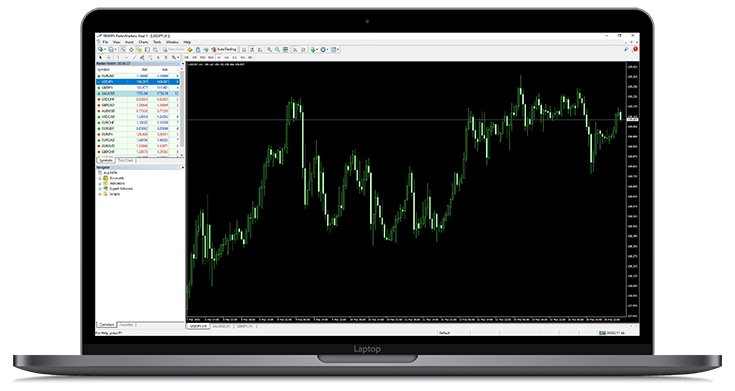
a PC for using MetaTrader, a forex platform

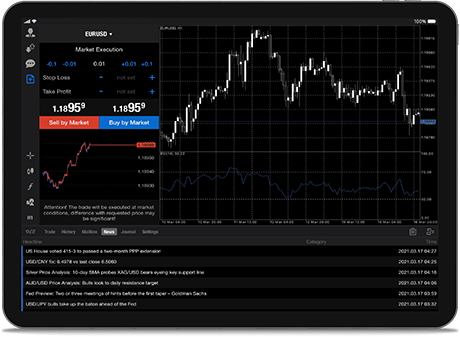
a Pad for using MetaTrader, a forex platform

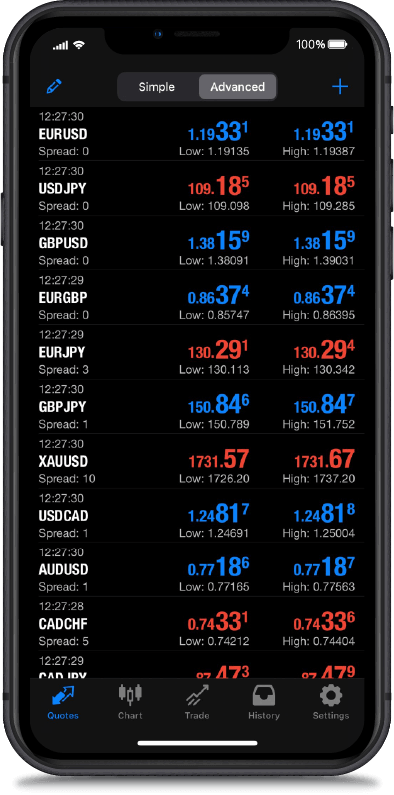
a cellphone for using MetaTrader, a forex platform

FIND YOUR GEAR
IN TRADING

At RADEX MARKETS
we offer a full range of platforms
that meet your needs.

MARKET WATCH

Iranian offshore oil dries up

October 2026

  ●  Iran floating storage now exhausted   ●  Brent Crude rises to $114   ●  Global selloff across asset classes Iranian offshore oil dries up Multiple reports are claiming that Iran’s offshore crude oil supplies have now run dry as a result of the blockade enforced by the US Navy. Iran has long maintained a fleet of tankers stationed in international waters near Malaysia and Singapore, which it has used to supply its allies with crude oil throughout the duration of the conflict, bypassing international sanctions and granting the war-torn country a much-needed income stream. The reports indicate that back in April, 150 million barrels were held in floating storage, but because of the inability of Iranian ports to dispatch new oil tankers, these supplies have substantially dwindled. Without fresh inventory to replenish them, Iran’s offshore supplies have now apparently been exhausted. According to US Central Command, the naval blockade has denied the Iranian regime at least $25 billion in oil revenue, severely limiting Tehran’s ability to replace destroyed weaponry and infrastructure. The missing oil volumes are not enough to cause a major supply shock; the bigger problem is that Iran now has very few economic options left, cornering the country into potentially more drastic courses of action. International shipping rates are already sky-high, as are risk premiums for navigating through middle eastern waters, and today’s development is certainly doing nothing to help matters. The Brent Crude benchmark rose to $114 per barrel earlier this morning, pulling further ahead of WTI contracts, which remain grounded at a more modest $100. The huge difference is indicative of just how high freight costs have risen; refiners would normally arbitrage this kind of spread, but the logistical costs of doing so now make such financial plays impossible. Global markets shaken Financial markets at large are reacting poorly to the deepening energy crisis. Higher crude oil prices mean higher inflation, something the world is collectively sick to death of hearing about. All asset classes were shaken yesterday, and the damage appears to be worsening this morning. Gold plummeted almost 3% on Thursday and continued the descent as today’s session got underway, briefly dipping under $4,000 per ounce. Silver has fallen to an 11-month low of $54 per ounce, platinum is lingering dangerously close to long-term support levels at $1,550, while palladium has already taken the plunge, dropping to a 16-month low of $1,040. Cryptocurrencies fared little better; Bitcoin fell back down to $81,000 but is showing some degree of resilience as of this morning. Equities are facing the additional problem of an ongoing flight from technology stocks, causing the S&P 500 to drop 1.2% and the Nasdaq-100 to crumble 2.9%, although the Dow Jones managed to remain flat on the day. The tech selloff has been particularly unkind to Asian stock markets. The Nikkei 225 fell 2.7% yesterday and continued to collapse this morning before buyers stepped in. The Kospi followed a similar path, falling 3.5% on Thursday and remaining under pressure early on Friday. It was the same story in the Hang Seng index, which lost 3% yesterday amid concerns that the Chinese government has largely abandoned the idea of a planned stimulus package that investors had been hoping for. A turbulent end to the week to say the least. #OIL #BRENT #IRAN About the Author Lawrence J. came from a strong technical and engineering background before pivoting into a more financial role later on in his career. Always interested in international finance, Lawrence is experienced in both traditional markets as well as the emerging crypto markets. He now serves as the financial writer for RADEX MARKETS. Reviewed by RADEX MARKETS Risk Warning: Trading derivatives and leveraged products carries a high level of risk, including the risk of losing substantially more than your initial investment.

READ MORE
RM Rooms Icon

RM NEWS ROOM

Trading Hours Change for CFD Indices 2026

21 October, 2026

RADEX MARKETS’ platform time for MetaTrader 4/5 will change from GMT+3 to GMT+2 starting 11/01/2026. Kindly refer to the information here.However, please note that starting 10/25/2026, the trading hours for the following CFD Indices will change in advance from GMT+3 to GMT+2: Affected Indices: ASX200, CAC40, DAX40, ESP35, FTSE100, and STOXX50 How will this affect my trades?  After the markets open on 10/24/2026, the trading hours for the affected indices will be GMT+2. Contracts will roll over at 12:00 AM platform time as usual. How will this affect EAs? If you use EA (Auto-trading) or any other algorithmic trading system, the change of trading time will affect your trades. Please confirm if you need to manually adjust the time on your EAs. Please feel free to reach out to us if you have any questions.  

READ MORE

ECONOMIC CALENDAR

( GMT +03:00 13:06 )
March 26, 2024
2026-10-26 09:00:00+00:00DEIfo Business Climate Oct
2026-10-26 10:00:00+00:00LUBalance of Trade Aug
2026-10-26 14:30:00+00:00USDallas Fed Manufacturing Index Oct

TRADER'S PICK

Russia dragged back into the fray

October 22, 2026

A number of recent developments suggest that the glacial relations between Russia and other parts of the world may be beginning to thaw. Political commitments are slowly being abandoned in favour of economic pragmatism, particularly now that the world finds itself without the endless fount of Middle Eastern resources. Northeast Passage This week, Reuters reported that Russian oil exports through the Northeast Passage have increased substantially this year, already surpassing 2025 volumes by 50%. During the summer months, ice cover in the Arctic Ocean is thin enough to permit vessels to traverse the entire span of Russia’s northern coast, which allows oil tankers to transit from the northwestern port of Arkhangelsk all the way to Japan and the Far East. The passage completely bypasses Western maritime jurisdictions, avoiding chokepoints such as the Suez Canal or the Malacca Strait, to say nothing of the Red Sea and all the shipping problems encountered therein. The United States, the United Kingdom and the European Union routinely stop and seize oil tankers deemed to be in violation of international sanctions, while also barring such vessels from Western ports and blacklisting operators from insurance and financial services, making oil shipments via the Suez route highly problematic. The legal difficulties of heading west are compounded by the current sky-high freight costs plaguing the global shipping industry. Under normal circumstances, the Northeast Passage is the more expensive route due to icebreaker escort fees, navigation permit charges, slower transit speeds and increased insurance premiums, but maritime freight rates are now expensive enough that the northern route has become economically viable. The North Sea Route, as it is also known, is much shorter than the traditional Suez route, cutting the journey to China from 21,000 km to just 12,000 km. By shaving thousands of nautical miles off the journey, the notion of delivering a tanker full of precious crude oil via the dangerous Arctic corridor is suddenly much more palatable. With the world’s super tankers tied up in much longer sea voyages, the northern release valve is seeing more use than ever before. US-Russia diesel agreement The second development is the direct agreement between Donald Trump and Vladimir Putin to ship Russian diesel to the United States. The first tanker will set sail later today, according to Deputy Prime Minister Alexander Novak, who went on to claim that additional shipments would soon follow and that Russia ‘will meet the United States’ needs, to the extent of our capabilities’. President Trump stated that Russia would export 300,000 tonnes of diesel in October, followed by 500,000 tonnes in November and 1,000,000 tonnes ‘immediately thereafter’. Paradoxically, the US is in fact a net exporter of diesel, but finds itself importing such refined petroleum products anyway due to geographic constraints and simple market dynamics. Most of the United States’ refining capacity is located around the Gulf Coast, from where much of the produced diesel is immediately exported to Latin America. Channelling fuel from Texas to the East Coast of the US is surprisingly difficult because of domestic shipping regulations and pipeline constraints; it makes more financial sense to simply import the required fuel from the likes of Canada, Europe, or, as of this week, Russia. The global oil market makes more sense when viewed in terms of regional networks of buyers and sellers as opposed to sovereign states trading with one another. The conflict in Iran has squeezed petroleum deliveries globally and said networks are now having to adjust to the change in market dynamics. Ukraine relations sour While not indicative of much in isolation, the recent souring of relations between Ukraine and the US adds crucial context to the Russian diesel agreement. Political friction between the war-torn country and the West in general has reached a level of discomfort not seen since the conflict began, while military aid packages meet increased resistance from US and European politicians alike. Economics trumps politics No one is immune from the rules of supply and demand. Faced with the economic reality of high energy costs and reduced access to natural resources, political purity suddenly becomes much harder to defend. The structural advantage of buying diesel from Russia now apparently outweighs the political commitment to ideological containment. The first diesel shipment is expected to reach the East Coast of the US within the next three weeks. About the Author Lawrence J. came from a strong technical and engineering background before pivoting into a more financial role later on in his career. Always interested in international finance, Lawrence is experienced in both traditional markets as well as the emerging crypto markets. He now serves as the financial writer for RADEX MARKETS. Reviewed by RADEX MARKETS Risk Warning: Trading derivatives and leveraged products carries a high level of risk, including the risk of losing substantially more than your initial investment.

READ MORE
LiveChat
livechat

Trading derivatives and leveraged products is high risk and may result in losses exceeding your initial investment. Read our T&C and PDS before trading.

OPEN ACCOUNT