





Financial Analyst/Content Writer, RADEX MARKETS
Lawrence J. came from a strong technical and engineering background before pivoting into a more financial role later on in his career. Always interested in international finance, Lawrence is experienced in both traditional markets as well as the emerging crypto markets. He now serves as the financial writer for RADEX MARKETS.


ACTIONS


The recent conflict in Iran severely tightened global oil supplies, starving the world of millions of barrels that would normally flow out of the Strait of Hormuz, leading to an acute spike in crude oil prices. In response, many countries around the world were forced to tap into their own domestic petroleum reserves in order to make up for the shortfall. This in no small part explains why oil prices only rose to the extent that they did. Instead of entering a bidding war for every last barrel of oil on Earth, governments around the world instead adopted a policy of using what resources were already available to them, while being more frugal with such. China in particular was able to dramatically reduce crude imports by making use of its vast inventories, while also throttling refinery output and limiting consumption within its borders. Similar approaches were adopted throughout the world; a collective strategy that did much to cushion the supply shock. An interesting but overlooked point about all of this is that a number of countries were well prepared for such an outcome. Why so? Why do nations around the world maintain strategic oil reserves?
As with many other facets of the global oil industry, the reasoning stems from the 1973 oil crisis. Towards the tail end of that year, Egypt, Syria and a number of Arabic nations launched a joint offensive against Israel. While the conflict itself would wind down relatively quickly, ending with a ceasefire less than three weeks into hostilities, the Arabic world, via OPEC, elected to punish all Western powers deemed to have been supportive of Israel by means of a wide-ranging oil embargo.
The embargo would last a mere six months, but this would be enough to prompt fuel shortages in many countries, causing oil prices to quadruple in some cases. The United States were not prepared for the ensuing supply shock, suffering significant inflationary pressures and poor economic growth as a result of the lack of petroleum. The US government was forced to implement a number of emergency measures, including a national 55 mph speed limit, year-round daylight-saving time and public campaigns to encourage energy conservation. Such measures were mostly temporary, but the crisis would provide the political momentum for the Energy Policy and Conservation Act, signed by President Ford in late 1975. The act included the creation of the Strategic Petroleum Reserve, designed to ensure the US would never again be caught with its pants down.
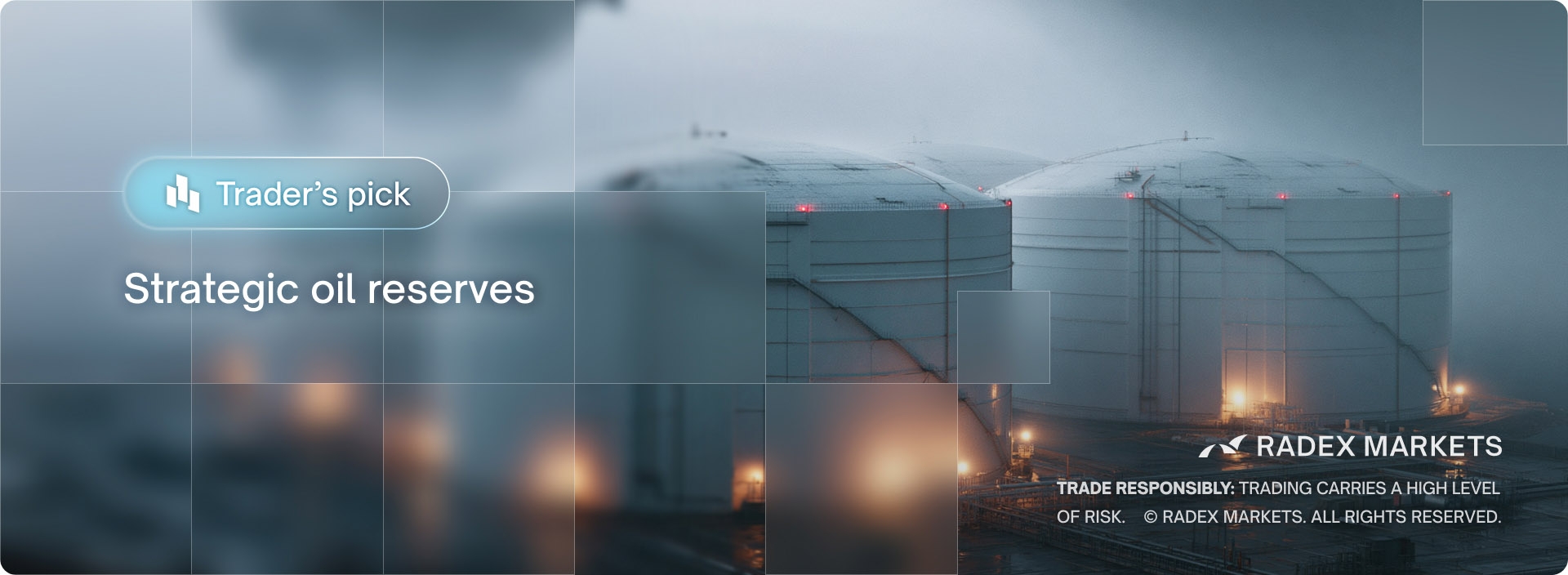
And so, over the following decades, the United States, and later other nations, would embark on vast oil storage infrastructure projects. The first image that comes to mind when hearing about petroleum storage is perhaps that of a large standing oil tank or silo, but this is generally not the case. Rather than build expensive above-ground facilities, the US elected to store the precious resource exactly where it came from: underground. Huge caverns were carved out by injecting water into underground salt deposits and removing the resulting brine, creating extremely large cavities that were relatively inexpensive to maintain.
Salt caverns have a number of beneficial properties when it comes to storing crude oil. The first is that salt is self-sealing; small cracks that would otherwise become leak paths in other rock formations will naturally close under pressure, making salt a self-sustaining containment vessel. The second advantage is that because the oil is stored underground, it is protected from the surrounding environment. Temperatures are much more stable, evaporation is minimal, extreme weather conditions such as hurricanes or tornados are a non-issue, as are any potential military threats. The third point is that salt cavern storage makes withdrawing the oil very easy: simply pump the cavern with water and the lighter crude oil will rise to the top, ready to be pumped out.
The United States had a head start in such endeavours, reaching a peak storage capacity of 727 million barrels by the mid-2000s, which it would fill to the brim by the year 2009. As of the time of writing, the Strategic Petroleum Reserve is roughly half full, but the amount of crude oil held in commercial reserves bumps the total figure up significantly. As mentioned in the opening paragraph, China also has huge crude oil storage facilities, but unfortunately getting an accurate figure is somewhat complicated by the fact that the Chinese state does not officially report on the volume of its reserves. Moreover, statistics often conflate government reserves and commercial inventories into the same figure, which amount to around 1.3 billion barrels in total. Somewhat surprisingly, the country with the third largest reserves is Japan, at around 300 million barrels in government capacity, plus another 180 million barrels in mandatory private sector reserves.
Taking population sizes and domestic consumption into account, Japan is very well insulated against supply shocks, maintaining inventories equivalent to 5 or 6 months of consumption, not only as crude oil, but as refined petroleum products as well, including petrol, diesel, kerosene and jet fuel. The safeguarding reflects the island nation’s reliance on foreign energy imports, as well as its vulnerability to natural disasters, which require usable fuel to be readily available. Firing up a refinery in the aftermath of a tsunami or earthquake is obviously not ideal when emergency vehicles need to be deployed to save lives.
When the US boasted full storage reserves back in 2009, it was still a net importer of petroleum products. As of today, the United States exports more total petroleum products than it imports, granting it an extra buffer against supply disruptions, somewhat justifying an only half-full SPR. China, due to its huge population size, is still a massive importer of crude oil because it produces only 30% of the amount needed to satisfy domestic demand, which explains the gigantic reserves accumulated in recent years.
While the US, Japan and China were able to withstand the recent supply disruptions with demonstrable preparedness, many countries around the world did not weather the storm so elegantly. South and South-East Asia were hit disproportionately hard, suffering economic consequences from the lack of oil and natural gas almost immediately. Pakistan and Bangladesh faced instant shortages, causing significant drops in industrial production and forcing both countries to introduce energy austerity measures. Given its huge population and comparatively small reserves, India was also unprepared for the supply shock, but managed to get away with it by aggressively buying from Russia; the event nevertheless served as a loud warning shot to build more storage facilities. Further east, it came to light that the Philippines imports up to 98% of its crude oil from the Gulf, while having absolutely no state-owned strategic reserves to speak of. The archipelago declared a state of emergency as early as March as the impact of fuel shortages ravaged its battered economy. Thailand, Vietnam and Indonesia all implemented shorter work weeks or work-from-home initiatives to save power, while rearranging commercial supplies and using emergency measures to make up for the shortfall. The lack of natural gas forced a number of countries in the region to lean more heavily on coal-fired generation to plug the gap. Needless to say, environmental concerns flew out the window over the course of the past few months.
Further north, the lack of oil and natural gas resulted in a very different problem. South Korea and Taiwan are renowned for their role in semiconductor manufacturing, an extremely energy-intensive industry that requires constant uptime. Disruptions to energy supplies, fluctuating freight and insurance rates, higher logistics expenses, unreliable deliveries of crucial chemicals and gases, all have immediate and profound impacts on the technology sectors of such advanced economies. The semiconductor industry can absorb very high energy costs before production becomes uneconomical – a computer chip is infinitely more valuable than a barrel of oil; the bigger problem is that so many vital pieces of the puzzle are dependent on a single shipping lane in the Middle East. The 20% drawdown in the Korean Kospi index between February and March illustrates the danger well enough.
Global energy architecture is incredibly fragile. The recent conflict in Iran was a wake-up call for many. The main take away is that being totally reliant on foreign nations for something as fundamental as power generation is strategically unacceptable. The lesson could have been much harsher.
About the Author
Lawrence J. came from a strong technical and engineering background before pivoting into a more financial role later on in his career. Always interested in international finance, Lawrence is experienced in both traditional markets as well as the emerging crypto markets. He now serves as the financial writer for RADEX MARKETS.
Reviewed by RADEX MARKETS
Risk Warning: Trading derivatives and leveraged products carries a high level of risk, including the risk of losing substantially more than your initial investment.


Le trading de produits dérivés et à effet de levier comporte un risque élevé et peut entraîner des pertes supérieures à votre investissement initial. Veuillez lire nos Conditions générales (T&C) ainsi que le Product Disclosure Statement (PDS) avant de trader.
CRÉER UN COMPTE