






AZIONI


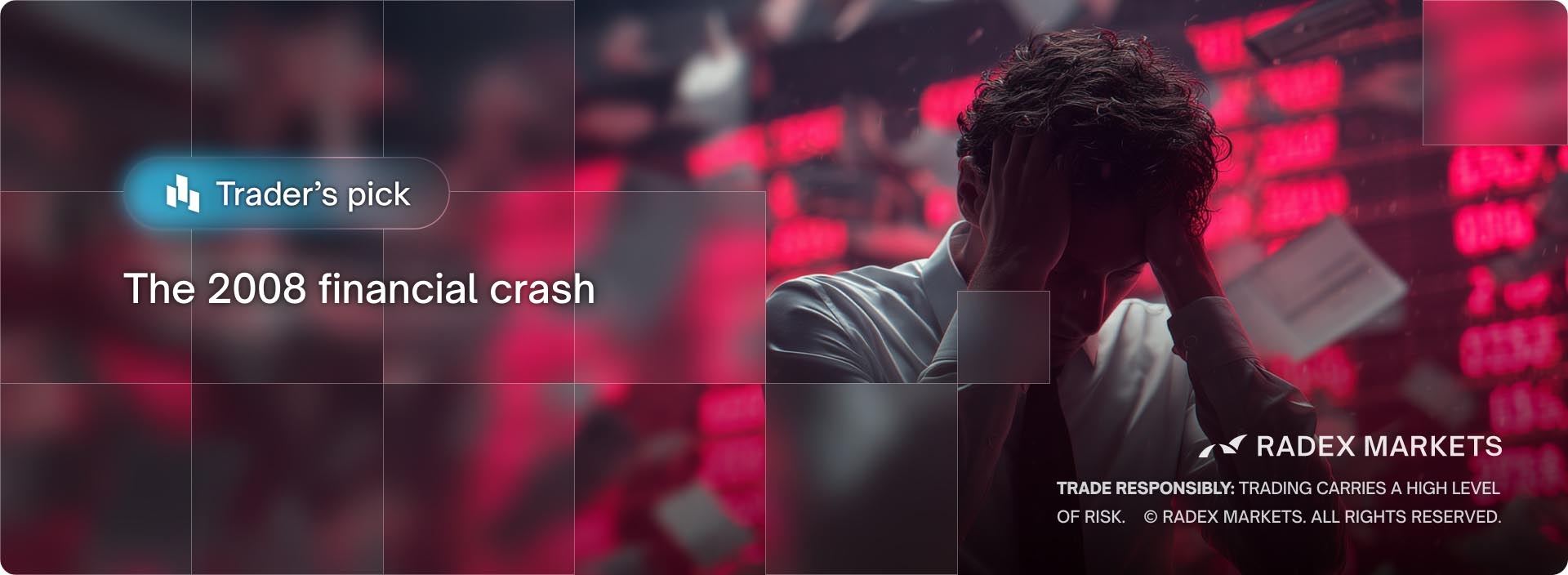
Picture this: It’s 2008.Barack Obama has just been elected as the 44th President of the United States and Lehman Brothers, one of the oldest banks in the world had been declared bankrupt.
But the global economy is supposedly booming, house prices are sky-high, and the phrase “too big to fail” is still being said with a straight face. Everyone from Wall Street bankers to taxi drivers seems to be making money, and the financial world is dancing merrily on the edge of a volcano. Then without warning, it erupts big time. Lehman’s was just the beginning!
Many of you reading this will be too young to remember the fall-out of what happened. At the time I was not trading myself, but I do remember all the talk was that governments were in a panic and the sky was about to fall in.
Almost overnight, markets that once felt invincible collapsed. Stock markets went into freefall, credit dried up, and even seasoned traders found themselves staring at their screens wondering how something that had seemed so strong could unravel so quickly. Banks were collapsing, governments were in crisis, and words like bailout, recession, and liquidity crisis became part of the everyday vocabulary.
For forex traders, it was a rollercoaster. Currency markets went haywire as investors scrambled for safety. The U.S. dollar, despite being at the centre of the storm, became the ultimate safe haven. The Japanese yen and Swiss franc soared. Commodity currencies like the Australian and New Zealand dollars? They were getting tossed around like paper boats in a hurricane.
The 2008 crash wasn’t just a blip on the economic radar; it was a total system reset. It exposed just how interconnected global markets had become and reminded everyone that the financial system is only as strong as the confidence people have in it.
But here’s the thing: every financial disaster has warning signs. They might be subtle at first, a credit bubble here, an overheated housing market there, but they’re always there if you know what to look for. The problem is, by the time most people notice, the music’s already stopped, and the lights are flickering.
So, before we dive into what those warning signs look like today, let’s rewind and actually unpack what went wrong back in 2008. Because understanding the causes of the last crash might just help us spot the next big one coming.
To understand how the 2008 crash unfolded, imagine a game of financial Jenga, everyone’s piling on risky blocks, taking bigger bets, and pretending the tower will never fall. Spoiler alert: Well, it did.
At the heart of the disaster were subprime mortgages, home loans given to people who really shouldn’t have been getting them in the first place. Banks were practically begging anyone with a pulse to borrow money. No savings? No problem. Low credit score? Here, have two, no, have three houses! The logic was simple: house prices always go up… until they don’t.
The Great Mortgage Illusion
Banks and financial institutions bundled these risky loans into financial products called mortgage-backed securities (MBS) and collateralised debt obligations (CDOs). They then sold them around the world, stamped with AAA ratings (because apparently, everyone forgot what “risk” meant). Investors from Tokyo to London snapped them up, convinced they were buying something as safe as government bonds, but in reality, they were sitting on a ticking time bomb.
When U.S. homeowners started defaulting on their mortgages, those “safe” investments suddenly turned toxic. The system was so intertwined that once the defaults started, it triggered a domino effect across global financial markets. Banks stopped trusting each other, interbank lending froze, and suddenly, liquidity, the lifeblood of the financial system, vanished almost overnight.
Lehman Brothers: The Domino That Fell Hardest
Then came the big one, Lehman Brothers, one of the oldest investment banks in America, filed for bankruptcy in September 2008. It was the fourth-largest investment bank in the U.S., and its collapse sent shockwaves around the globe. If a giant like Lehman could go under, who was safe and who was not?
The panic that followed was absolute. Banks didn’t know who was holding what kind of toxic debt, so they stopped lending altogether. Businesses couldn’t borrow, consumers couldn’t get credit, and financial markets went into a tailspin. Central banks stepped in with emergency measures, but by then, the world was already staring into the abyss.
The Chain Reaction
The financial system had been built on a mountain of leverage, and once that mountain crumbled, there was no stopping the avalanche.
In short, the 2008 financial crash was caused by too much debt, too little oversight, and far too much confidence. It was a perfect storm of greed, complexity, and denial, and it exposed just how fragile the global economy really was.
For forex traders, this chaos meant one thing: volatility like never before. Currencies that normally moved a few dozen pips a day were suddenly swinging by hundreds. Traders who understood macroeconomics, and the psychology of fear, were able to navigate the storm. Others, well… they learned what a margin call felt like.
When the financial world started shaking in 2008, the forex market didn’t just wobble, it went full earthquake mode. Currencies, which usually dance to the rhythm of economic data and interest rates, suddenly began moving to the beat of fear. Traders weren’t just analysing charts anymore; they were analysing panic.
You’d be forgiven for thinking that with the U.S. being at ground zero for the crisis, the US dollar would have crumbled. But no, in a twist worthy of financial irony, the USD actually strengthened. Why? Because in times of global chaos, investors tend to run toward safety, not away from it. And despite being the source of the problem, the U.S. dollar was (and still is) the world’s reserve currency, the one asset everyone trusts when things go south.
Banks, hedge funds, and central banks all needed U.S. dollars to cover debts and margin calls. This sudden rush for liquidity caused the dollar to surge, particularly against riskier currencies. It was like everyone crowding into a single lifeboat while the ship sank, uncomfortable, but still better than drowning.
The Rise of the Forex Safe Havens
Two other currencies joined the dollar in the lifeboat: the Japanese yen (JPY) and the Swiss franc (CHF). Both have long been considered safe havens in uncertain times, and 2008 proved why.
The yen surged as global investors unwound their famous carry trades, positions where traders borrowed cheap yen to invest in higher-yielding currencies like the Australian or New Zealand dollar. As risk appetite vanished, those trades were closed out quickly, sending the yen skyrocketing and the AUD and NZD plunging.
Meanwhile, the Swiss franc, known for stability, neutrality, and fondue, also gained ground. Switzerland’s strong banking system and low inflation made it another popular refuge. For forex traders, it was a masterclass in what happens when “risk-on” suddenly becomes “risk-off.”
The Great Risk Currency Collapse
While the safe havens thrived, risk currencies were getting absolutely hammered. The British pound (GBP) suffered as the UK’s overexposed banking sector got crushed. The euro (EUR) struggled with fears about the Eurozone’s financial stability. And commodity-linked currencies like the AUD, NZD, and CAD plummeted as global trade slowed and demand for raw materials dried up.
This was when forex traders truly learned that currency pairs are not just about numbers, they’re about sentiment. When fear grips the markets, fundamentals take a back seat, and psychology takes the wheel.
Volatility: The Trader’s Dream (and Nightmare)
The crash turned forex into a battlefield. Daily moves that once seemed massive became normal. The VIX (Volatility Index), nicknamed the “fear gauge”, spiked to record levels, and forex traders suddenly found themselves in a world where stop-losses got hit faster than you could blink.
Some traders made fortunes navigating the wild swings, while others got wiped out. It was the ultimate test of discipline, risk management, and emotional control. For those who survived, it reinforced a golden rule:
When markets panic, liquidity disappears first, and opportunity follows a close second.
When the smoke cleared after 2008, the financial landscape looked more like a war zone. Banks were wounded, economies were in shock, and governments around the world were scrambling to figure out how to stop the bleeding. What followed was the deepest global recession since the Great Depression in the 1930’s, and the forex markets reflected every painful twist and turn.
Central Banks to the Rescue (With the Money Printer)
The world’s central banks, led by the U.S. Federal Reserve, decided the best way to fix a financial system drowning in bad debt was… to drown it in new money. Thus began the era of Quantitative Easing (QE), a fancy term for creating money out of thin air and using it to buy government bonds and other assets.
The logic was simple: pump liquidity into the system, keep interest rates near zero, and hope the economy restarts. And for a while, it worked. Financial markets stabilized, banks began lending again, and investors slowly crept out of their bunkers.
But QE also had some unexpected side effects. With all that cheap money sloshing around, asset prices started inflating again, from stocks to housing to, yes, currencies. Traders began to realise that in this brave new world, central banks were the market’s new puppet masters.
The Dollar’s Long Reign
During the years that followed, the U.S. dollar maintained its safe-haven appeal. The Fed’s massive stimulus measures eventually helped the U.S. economy recover faster than most, reinforcing the dollar’s dominance. The USD index (DXY) climbed as global investors sought returns in America’s recovering markets.
But not everyone was so lucky. Europe stumbled into its own crisis, the Eurozone debt meltdown of 2010–2012, where countries like Greece, Spain, and Italy flirted with bankruptcy. The euro struggled, and traders learned a valuable lesson about how even supposedly “unified” economies can unravel under a lot of stress.
Commodity Currencies and the China Effect
Meanwhile, commodity currencies like the AUD, NZD, and CAD went through whiplash. As China rolled out massive infrastructure spending to stimulate its economy, demand for raw materials spiked, lifting these currencies from the depths. But this new dependency meant that when China sneezed, Australia caught a cold.
For forex traders, it was a fascinating time. Global events, from European debt scares to Chinese growth figures, could swing currencies wildly. The crisis had made traders more macro-aware: everyone was watching central banks, government debt levels, and GDP reports with the intensity of a hawk eyeing its prey.
Lessons from the Recovery
The years after 2008 redefined what “normal” looked like in global finance. Interest rates stayed near zero for over a decade. Inflation vanished (for a while). Central banks became the new heroes and villains of the markets, capable of sending currencies soaring or tumbling with a single speech.
But perhaps the biggest takeaway for traders was this:
The forex market doesn’t just respond to numbers; it reacts to trust.
When confidence in the system wavers, traders flock to safety. When it’s restored, risk returns. It’s a constant balancing act between fear and greed, the same two emotions that caused the 2008 crash in the first place.
History has a funny way of repeating itself, especially when money is involved. After the 2008 crisis, policymakers promised “never again.” But here we are, more than a decade later, and many of the same ingredients are quietly simmering beneath the surface. The only real difference? The numbers are bigger this time.
So, could another global financial crash happen? Absolutely. The question is when, and what clues might give it away.
One of the biggest causes of the 2008 meltdown was excessive debt, and, well… that problem hasn’t really gone away. In fact, global debt is now well over $300 trillion, according to the IMF. Yes, you did read that correctly and it was not a typo. Governments, corporations, and households have all borrowed heavily to fund spending, investments, and stimulus since the pandemic.
When debt levels soar, it only takes a small shock, like rising interest rates or a banking scare, to set off a chain reaction. As traders, this is red flag number 1. Keep an eye on countries or sectors with unsustainable debt-to-GDP ratios and watch how their currencies behave when central banks tighten policy. Debt bubbles don’t pop easily or quietly.
Sound familiar? Stocks, property, and even crypto have all experienced meteoric rises in recent years. When asset prices climb too far, too fast, (gold for example) and everyone starts thinking “this time it’s different”, that’s usually when it’s not different. Housing markets in some major economies are already showing signs of strain as interest rates rise. If property prices start sliding sharply and defaults tick up, the ripple effects on banks and consumer confidence can hit currencies fast.
After 2008, central banks spent years keeping interest rates ultra-low and printing money like it was going out of fashion. Now, in response to inflation, they’re doing the opposite, hiking rates aggressively. The problem? Too much tightening can choke economic growth and expose weak points in the financial system.
For forex traders, that means volatility. Keep an eye on how currencies react to interest rate expectations and yield curve inversions (when short-term bond yields rise above long-term ones). That’s often a classic signal that recession, and potential crisis, could be looming on the horizon.
One of the sneakiest risks today lies in shadow banking, financial institutions that operate outside traditional regulation. Hedge funds, private equity firms, and non-bank lenders have ballooned in size, and much of their leverage is hidden from public view. If something in that system snaps, the contagion could spread just like it did in 2008.
For traders, watch the credit markets. If interbank lending rates spike or liquidity dries up, that’s often the first tremor before the major quake.
Back in 2008, the crisis started in U.S. housing and spread worldwide. Today, the system is even more interconnected. A slowdown in China, a debt default in Europe, or an oil price shock in the Middle East can ripple through global markets in hours.
That’s why forex traders need to keep one eye on the macroeconomic picture. Look at correlations, how the USD moves when oil spikes, how the yen behaves when global equities fall, or how emerging market currencies react to tightening liquidity. The clues are there if you know where to look.
Finally, and perhaps most importantly, there’s the human factor. Every crash share one universal trait: nobody believes it’s coming until it’s too late. In 2007, financial experts were still insisting the U.S. housing market was “fundamentally strong.” In 2021, people said the same about tech stocks. The market doesn’t crash when everyone’s scared, it crashes when everyone is feeling comfortable.
If there’s one thing the 2008 financial crash proved, it’s that markets can go from calm to chaos faster than you can say WTF just went down? It was a once-in-a-generation event that reshaped the financial landscape, humbled Wall Street, and turned risk management from a boring side note into a special force’s survival skill.
For forex traders, it left behind a treasure trove of lessons, the kind you only learn when the world catches fire and you’re still trying to trade your way through it.
When panic hits, there’s no room for guesswork. Traders flee to safety, and in the forex world, that means the U.S. dollar (USD), Japanese yen (JPY), Swiss franc (CHF) and of course Gold. Understanding why and when these currencies strengthen during turmoil can turn chaos into opportunity.
If you ever see the world looking a little shaky, whether it’s a banking scare, a geopolitical conflict, or a sudden market shock, keep an eye on these pairs. They’re often the first to move when fear starts spreading.
In 2008, many traders learned the hard way that leverage cuts both ways. A 100:1 trade looks great when you’re right, but catastrophic when you’re wrong. The lesson? Respect leverage. Use it sparingly. Think of it like a chainsaw: incredibly useful when handled properly, but disastrous when waved around recklessly.
Before 2008, most traders paid some attention to interest rate decisions. After 2008, they practically started worshipping central bank statements. From the Federal Reserve to the European Central Bank and the Bank of Japan, these institutions became the key market movers. Their tone, forecasts, and even the phrasing of a press release can send currencies soaring or tumbling. So, if you don’t already have your economic calendar bookmarked, it’s time to fix that.
During the crisis, volatility exploded. Pairs that once moved 50 pips a day were suddenly doing 500. For the unprepared, it was terrifying. For the disciplined, it was pure opportunity. The traders who survived, and thrived, were the ones who had clear strategies, tight risk controls, and emotional discipline. They didn’t chase trades; they waited for setups. They didn’t panic; they adapted.
If 2008 taught forex traders anything, it’s that the big picture always matters. You can have the best technical setup in the world, but if there’s a systemic shock brewing, a debt crisis, a liquidity squeeze, a central bank pivot, your charts won’t save you. Successful traders learned to read economic data, follow global news, and understand the underlying story driving price action.
Finally, perhaps the most important lesson: no matter how bad things get, markets always recover. The 2008 crash wiped out trillions, but it also paved the way for over a decade of new opportunities, new technologies, new monetary policies, and new trading trends. Traders who stayed informed, flexible, and patient were the ones who came out stronger on the other side.
As I mentioned at the beginning of this article was not a trader in 2008 but having done the research the warning signs are there for the next financial disaster and maybe, just maybe, the next one is not too far away.
The 2008 financial crash was more than just an economic disaster; it was a brutal education in how the global markets really work. It showed us that confidence drives everything, that debt is a double-edged sword, and that human nature, with all its greed and fear, nothing never really changes.
For forex traders, it’s a reminder to think beyond the charts. The next big crash may not come from subprime mortgages or Wall Street banks; it could come from government debt, digital assets, or even geopolitical conflict. Whatever form it takes, those who understand history, and watch the warning signs, will always be one step ahead.
So, stay sharp. Stay curious. And when the next financial earthquake hits, don’t panic, trade smart.


Il trading di derivati e prodotti con leva finanziaria comporta un rischio elevato e può causare perdite superiori al capitale inizialmente investito. Prima di fare trading, leggere i nostri Termini e Condizioni (T&C) e il Product Disclosure Statement (PDS).
APRIRE UN CONTO