





Financial Analyst/Content Writer, RADEX MARKETS
Lawrence J. came from a strong technical and engineering background before pivoting into a more financial role later on in his career. Always interested in international finance, Lawrence is experienced in both traditional markets as well as the emerging crypto markets. He now serves as the financial writer for RADEX MARKETS.


AZIONI


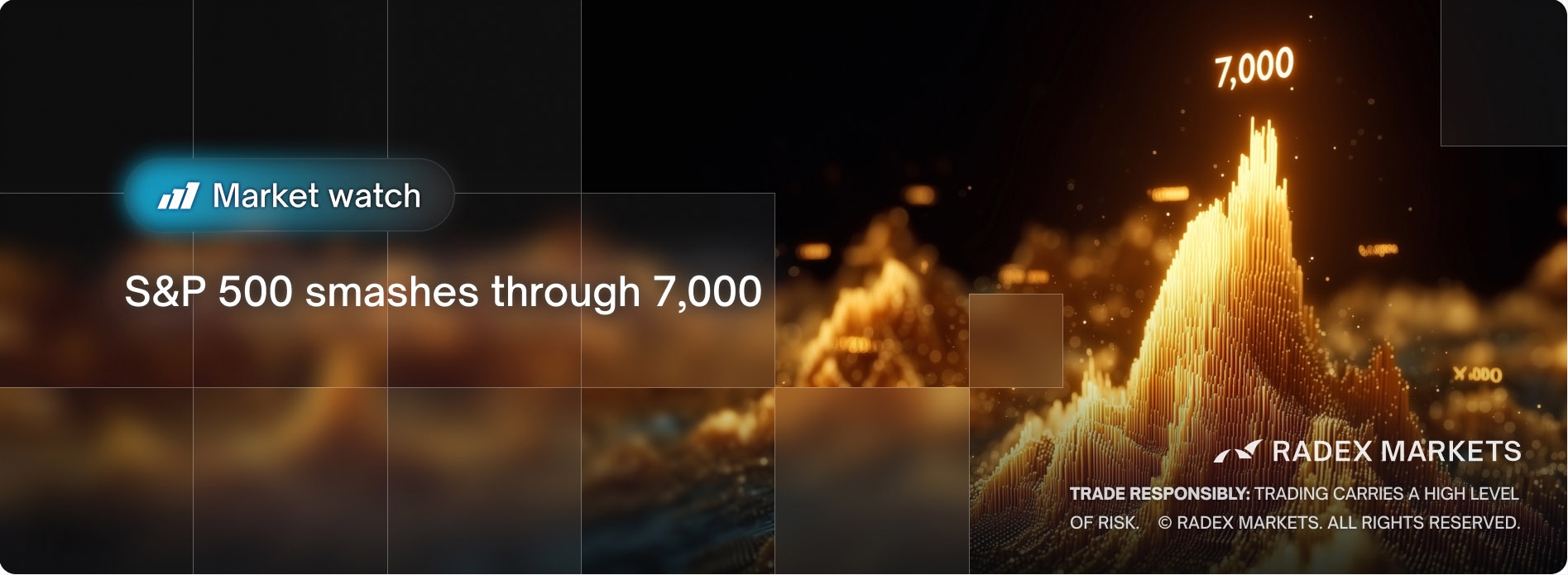
The S&P 500 and Nasdaq Composite recorded back-to-back record highs over the last two sessions, as markets worldwide maintain a level of cautious optimism regarding a cessation of hostilities in the Middle East. Both indices have emerged stronger than ever from the Iran-induced dip, erasing the losses incurred in March and propelling the S&P 500 past the 7,000-point threshold. According to President Trump, Israel and Lebanon have agreed to a temporary 10-day ceasefire, raising hopes that a more permanent resolution may be in the pipeline. Asian markets have also enjoyed the recent lull in military activity, pushing the Nikkei 225 to a record high of its own on Thursday. Some markets remain unconvinced, in particular precious metals, which have failed to maintain the positive momentum from earlier in the week. Gold is currently trading for $4,800 per ounce and much like yesterday, has yet to commit to any particular direction.
Oil prices rose again yesterday, but remain under $100 for the time being. Brent Crude is now trading at $98 per barrel, while the WTI benchmark has fallen to $89. Oil markets are still in backwardation, meaning front-month contracts are being priced at a premium compared to deferred contracts, which are stabilising around $80 per barrel. The premium suggests that oil market participants are expecting the conflict to resolve sooner rather than later and that current shortfalls in production and delivery are only temporary. Meanwhile, natural gas continues to maintain a degree of stability despite supply disruptions in the Middle East, as markets expect US production to ramp up over the course of this year and into the next.
On Thursday, financial services company Charles Schwab launched its spot crypto trading platform, making bitcoin and ether available to clients. The platform aims to compete with the likes of Robinhood and Coinbase and marks another step towards bridging the gap between traditional and decentralised finance. The move aligns with the observed consolidation between the two financial worlds, with crypto companies applying for US banking charters on the one side and traditional financial institutions offering access to cryptocurrency markets on the other. Another, unrelated development has triggered many heated debates this week, one centred around a proposal to make Bitcoin more resistant to future quantum attacks. BIP-361 proposes a migration to a new system of quantum-resistant addresses, which would ultimately do away with the current elliptic curve architecture. The proposal is contentious because it would force users to manually migrate their bitcoin towards the new system. This would eventually leave all the coins in dormant wallets to be permanently stranded, thereby effectively reducing the total supply of bitcoin.


Il trading di derivati e prodotti con leva finanziaria comporta un rischio elevato e può causare perdite superiori al capitale inizialmente investito. Prima di fare trading, leggere i nostri Termini e Condizioni (T&C) e il Product Disclosure Statement (PDS).
APRIRE UN CONTO