



Financial Analyst/Content Writer, RADEX MARKETS
Lawrence J. came from a strong technical and engineering background before pivoting into a more financial role later on in his career. Always interested in international finance, Lawrence is experienced in both traditional markets as well as the emerging crypto markets. He now serves as the financial writer for RADEX MARKETS.


CHIA SẺ


European natural gas soared past €80 per megawatt-hour this week, matching prices last seen following the outbreak of the Russia-Ukraine conflict back in 2022.
Front month Dutch Title Transfer Facility (TTF) futures rose as high as €83 on Wednesday morning before pulling back to the high €70 range. To put the figure into perspective, natural gas started the year at €28 per MWh, meaning prices have almost tripled over the last nine months.
The staggering rise in gas costs serves as a reminder that petroleum is not the only vital resource being throttled as a result of the conflict surrounding Iran; crude oil prices are ‘only’ up 70% in comparison.
To make matters worse, Europe is heading into winter with some of the lowest reserves of natural gas observed in many years. Storage facilities are currently less than 70% full, compared to an average of 85% over the last five years.
The paradoxical aspect of the rise in natural gas prices is that Europe buys very little from the Middle East. In fact, as of 2026, over a quarter of all gas imports arrive from the United States.
In the United States, natural gas trades at around $2.90 per million British thermal units (MMBtu), which equates to roughly $9.50 per MWh, or €8.20 in the common currency. This means that Europeans are paying ten times as much for natural gas than consumers in the US.
Europe used to rely on cheap Russian gas, transported via pipeline, which accounted for 40% of the continent’s needs. This figure has since dropped to around 10% following the war in Ukraine. Domestically, Norway still produces a sizeable chunk of the required input, supplying around a third of Europe’s natural gas, via thousands of kilometres of underwater pipelines.
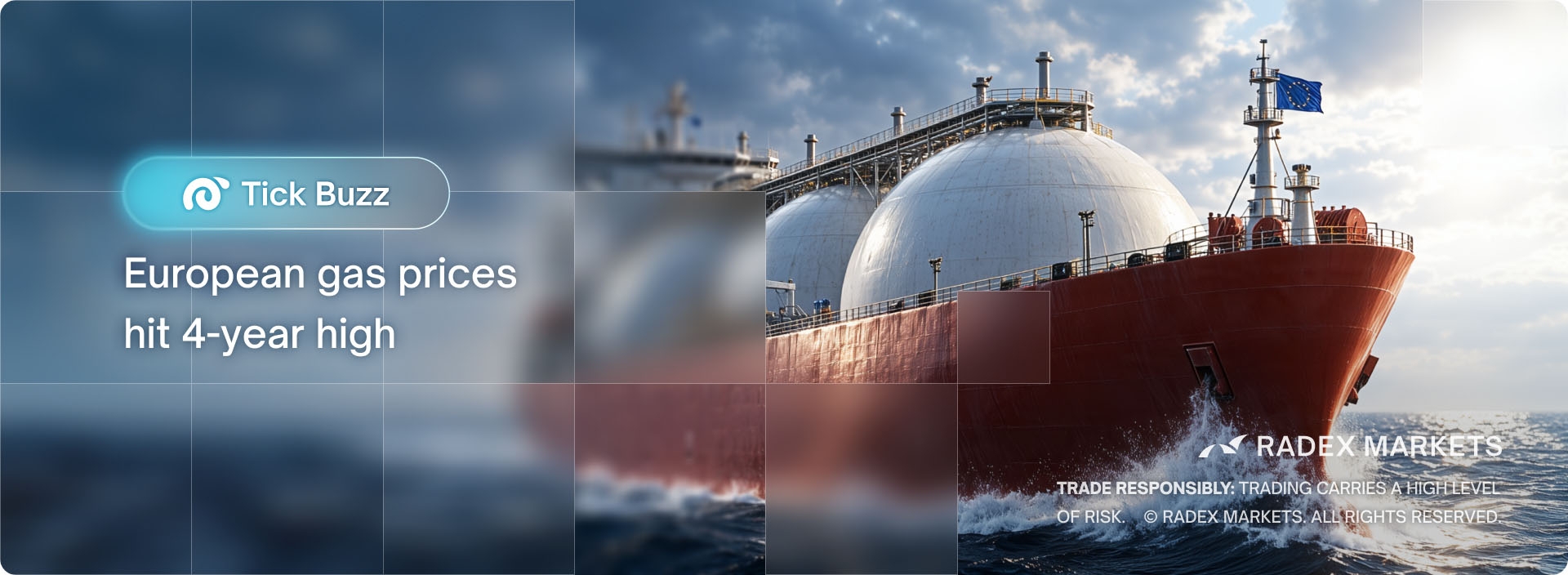
The problem lies with the rest of the required deliveries. To make up for the shortfall, Europe has resorted to importing Liquified Natural Gas (LNG) from various parts of the world, but mostly from the US.
As the name implies, LNG is simply natural gas that has been liquified by supercooling the product to -162 °C. This makes LNG far more difficult from a logistical point of view. Rather than sending gas through a pipeline, LNG is transported on extremely specialised vessels that maintain ultra-low temperatures, to facilities that then vaporise the liquid back into gaseous form when needed. Liquifying natural gas reduces the volume by a factor of 600, which is the only reason transporting it by ship is economically viable to begin with.
Such delivery mechanisms are expensive, but the bigger issue is that LNG is a global market, and one of the major producers happens to be locked behind the Strait of Hormuz. Qatar, as tiny a country as it is, typically accounted for 20% of the world’s LNG exports. As of today, those exports have all but vanished. Customers in Asia used to account for around 90% of all of Qatar’s exports, but with those now unreachable, the East has turned to the US and other parts of the world.
The additional competition between buyers is pushing prices higher, and Europe is being hit the hardest of all. The rise in international gas prices is having a disproportionate impact on Europe because the continent is vulnerable to global spot markets. Far Eastern nations secure most of their gas deliveries by way of fixed, long-term contracts, isolating them from day-to-day fluctuations. Europe does not have this luxury and is essentially in a bidding war for every remaining LNG tanker out there. The likes of Japan and South Korea also have alternative options, such as coal-fired power plants, which are largely non-existent in Europe today.
Many European buyers assumed the Iran conflict would be over by now, but the cold winter months are fast approaching and reserves are low. The situation is causing some degree of panic-buying on the European continent, hence the surge in Dutch TTF futures in recent weeks.


Trading derivatives and leveraged products is high risk and may result in losses exceeding your initial investment. Read our T&C and PDS before trading.
MỞ TÀI KHOẢN